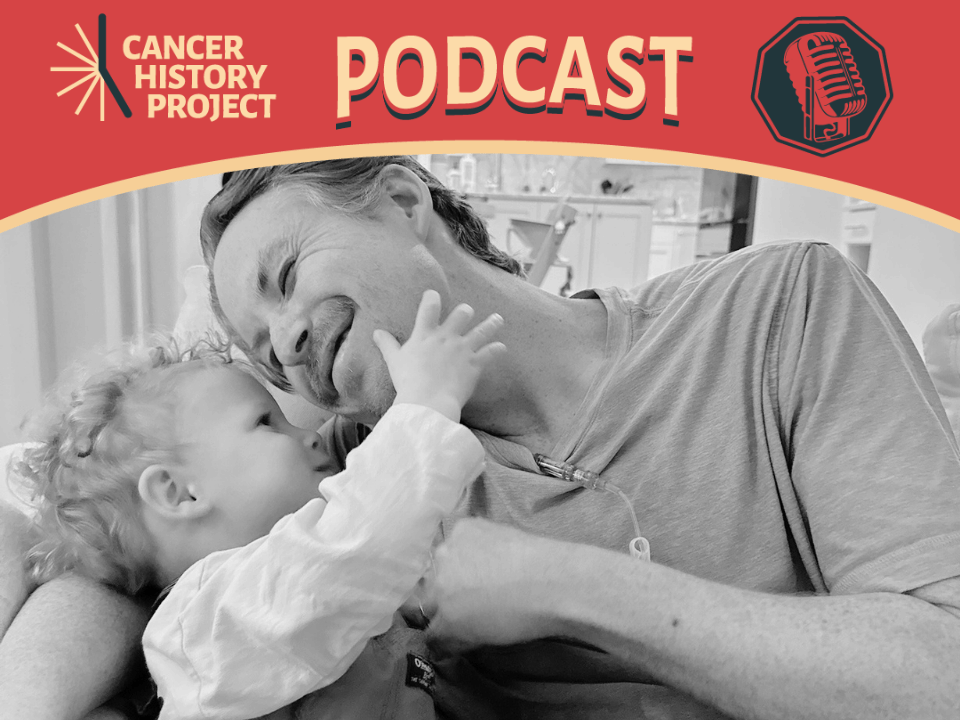
When 34-year-old Keaton Herzer was diagnosed with cholangiocarcinoma, a rare bile duct cancer, he didn’t want to settle for anything less than a cure.
“I remember so vividly, the surgeon said, ‘This is actually a very good treatment, we’ve seen people live up to five years with this device,’” Herzer recalled. “And I remember thinking, ‘Man, you’re saying that to me like it’s a good thing? I’m supposed to be happy about five years? I’m hoping for 40 more years or more.’”
He had a 16-month-old little boy and didn’t want him growing up without a father. 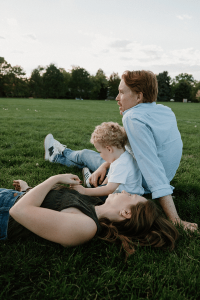
Throughout his treatment, he was given bad news time and time again: your tumors aren’t shrinking; this drug is not covered by insurance; you are not a candidate for a liver transplant.
But he didn’t take no for an answer. When chemo wasn’t working, he found a treatment that targeted his mutation. He fired his oncologist after repeatedly feeling dismissed and unseen. He challenged insurance denials.
“[My wife and I] spent probably four hours or more on the phone with insurance every day for a month,” Herzer said. “Do I wait or do I deplete my entire life savings and pay for these infusions out-of-pocket? I don’t want to wait because time is not on my side with this cancer. Anytime I spend waiting, it could mean my cancer grows, it spreads, and then a transplant is off the table completely.
“We drained our savings, we paid out of pocket.”
One battle after another, Herzer fiercely advocated for himself.
Today, Herzer is a liver transplant recipient with no evidence of disease. His son is now 3.
In this episode of The Cancer History Project Podcast, Deborah Doroshow, associate professor of medicine at Tisch Cancer Institute at Mount Sinai, sits down with survivor Keaton Herzer in honor of cholangiocarcinoma awareness month.
The Cancer History Project Podcast is sponsored by City of Hope, the American Society of Clinical Oncology, the Sidney Kimmel Comprehensive Cancer Center at Johns Hopkins, and the University of Texas MD Anderson Cancer Center.
Survivor stories
The Cancer History Project has been collecting stories from cancer survivors since its launch in 2021. Here are some highlights:
- Christy Erickson’s cancer diagnosis led to life as a motorcyclist and strongman competitor
- Lung cancer couldn’t slow down physician and athlete Lawrence Phillips
- CAR T-cell therapy produced a complete remission of Marcus Humphrey’s lymphoma
- Chris Lundy had one week to live; 52 years later, he is the longest living BMT recipient at the Hutch
- Dwight Tosh, the 17th patient at St. Jude, on surviving lymphoma in 1962
- How Beth Carner went from six weeks left to live with stage 4 colon cancer to complete remission
- In 1998, a CML patient was out of options. Then she chanced into a treatment–Gleevec
Episode transcript
Sara Willa Ernst: When Keaton Herzer was diagnosed with cholangiocarcinoma, a rare bile duct cancer, at 34 years old, he didn’t want to settle for anything less than a cure. He had a 16-month-old little boy and didn’t want him growing up without a father.
Throughout his treatment, he was told bad news time and time again. Your tumors aren’t shrinking. This drug is not covered by insurance. You are not a candidate for a liver transplant.
But he didn’t take no for an answer. He challenged insurance denials. When chemo wasn’t working, he found a treatment that targeted his mutation. He even fired his oncologist when he felt dismissed and unheard.
One battle after another, Herzer fiercely advocated for himself.
Today, Herzer is a transplant recipient. His son is now 3, and says that being a dad is the best job he has ever had.
On this episode of The Cancer History Project Podcast, Deborah Doroshow, associate professor of medicine at Tisch Cancer Institute at Mount Sinai, sits down with survivor Keaton Herzer in honor of cholangiocarcinoma awareness month.
The Cancer History Project Podcast is sponsored by City of Hope, the American Society of Clinical Oncology, the Sidney Kimmel Comprehensive Cancer Center at Johns Hopkins, and the University of Texas MD Anderson Cancer Center.
Keaton Herzer: Morning. How’s it going?
Keaton Herzer: Me too.
Keaton Herzer: Yeah. So, I’m a husband, father of a three-year-old. I live in Colorado and right now I’m working at our family business, a construction contractor. So I’m handling all of our technology stuff. But I spent 12 years as a software designer, digital product designer. I’ve worked with some startups and some agencies, and so it’s a diverse background of things. Yeah.
Keaton Herzer: My immediate family? Whatever you want. So yeah, my wife and I have been together since 2009, if you can believe that. We met in high school at an SAT camp, SAT test bootcamp. And obviously neither of us wanted to be there, but we kind of bonded over that initially. And then here we are today. So yeah, our son was born in 2023. He’s the best thing in the world, in my opinion. Obviously I’m biased. I think he’s a pretty cool kid. He’s really funny. He’s got a big personality. Yeah, it’s cool. Being a dad is something that I really… That’s my favorite job, I would say.
Keaton Herzer: Please do. Yeah.
Keaton Herzer: So I can start at the beginning. I didn’t really have a lot of symptoms before my diagnosis. Nothing that would’ve really jumped out as alarming, like something is wrong here. I had a couple of days of abdominal pain right below my ribs where my liver is. And I was doing some Googling and Google said, “Hey, maybe you have a gallbladder infection.” And I though, “Well, I’ll just go into the ER, get it checked out.” And they did an ultrasound in the ER and the doctor came back with his boss, which I know is never a good sign. They were like, “Hey, we found these giant masses on your liver.” And I was shocked to hear that. I though it was a mistake or I was like, “It couldn’t possibly be masses on my liver.”
Keaton Herzer: I was alone. Yeah. I went in at 9:00 AM on a Wednesday and I had an 11 o’clock meeting. I was like, “I’ll be back for my meeting.” And I was not back for my meeting.
After they told me about the masses, I called my wife and she came to the hospital, but they ended up keeping me overnight. They did a CT scan right after that. They kind of confirmed that I had a mass that was almost 11 centimeters on my left lobe. And then I had another one that was eight centimeters on my right lobe and then just dozens and dozens of other masses throughout my liver. And the CT scan confirmed that and they kept me overnight in the hospital to do a biopsy the next day. And four days later I got the notification from MyChart saying, “Ding, you have a new test result.” Open that up. At the time I didn’t know it was cholangiocarcinoma. It said, what did it say? I think it said carcinoma and I know that’s cancer. I had never heard of cholangiocarcinoma before, but it was quite a shock to me and to my family because I thought things were going well. I though it was a normal, healthy guy. And here I was with this cancer diagnosis.
And I think my son was around 16 months old at the time. And so my wife and I were just kind of figuring out how to be parents, how do we want to raise our son. That was our main focus at that time. We weren’t even thinking about cancer at all. So it was a huge shock to us and it was really hard to deal with and come to terms with the fact that, okay, I have cancer now. So what do we do about that?
Keaton Herzer: Oh yeah. Oh yeah. I Googled everything. Especially in those four days, when I didn’t know what exactly it was they had done the biopsy and then it was like, well, maybe it’s benign. It’s common to see some benign masses. And what does this blood work test result mean? And what happens if this one’s a little elevated and what do all these things mean? I Googled everything and that probably wasn’t the best for my mental health, but I’m the type of person that I need to know the information. I want to know what I’m up against. I want to come up with a plan as soon as possible. And what I learned with this type of cancer is that that’s what you have to do. You have to move quickly. You have to come up with a plan and take action because it’s a rare, aggressive cancer. And you definitely want to start as early as possible with treatment and getting the plan together and everything like that. So I think I talked to maybe four oncologists in the Denver/Colorado area in that first week, just trying to figure out what kind of cancer is this? What do I do? What are my next steps?
And we heard from multiple doctors that it’s probably a cholangiocarcinoma. And of course I Googled that and what I found online was not exactly encouraging. It was a lot of like, you’re not going to live very long type of things. And especially with tumors as large as mine, the prognosis was not looking good. I had a couple doctors tell me to make a will and that was really hard to process, especially because my son was still very young and I don’t think he deserves to lose his dad. I don’t think my wife deserves to be a single mother and I want to be there for them. I want to see them grow up. I want to see him do all of these things.
Keaton Herzer: Yeah. I mean, I talked to her about everything. So she’s got an MPH and at the time she was working at GoodRx. I don’t know if we want to say the name of the company on the podcast, but she did all their research into drug pricing and things like that. So she’s familiar with healthcare and the insurance industry and all these things. And she’s a good resource, still is a good resource to bounce ideas off of. And she’s got a way of walking me off the ledge when I get a little too anxious about things.
But it’s hard to have those conversations to be like, “Hey, I might not be around. What are we going to do about that?” And I think both of us kind of processed it in our own way. And God bless her, she was a source of strength for me in the beginning. She was like, “We’ll figure it out. We’ll get a plan together, start you on treatment.” And I think internally she was really concerned about it, as concerned as I was about it.
But it was a time of radical acceptance, right? This is happening. This is real. Okay. I accept that. Now what do we do? And both of us just immediately kicked into that fight or flight. I guess flight’s not an option. So it was, okay, we fight. And that’s kind of what we started doing. So we used some website to try to find who is the specialist, the expert in treating cholangiocarcinoma. And we found a doctor in New York at Sloan Kettering who is one of the world’s leading experts in cholangiocarcinoma. And we made the decision to move our family from Colorado to Bridgeport, Connecticut so that I could start treatment at Sloan Kettering in New York. And that was about two weeks after my diagnosis. I was diagnosed in March of 2025 and by April, we was driving across the country to move to Connecticut.
Keaton Herzer: Nope. Not a single person.
Keaton Herzer: No. We learned that pretty quick when we were doing an hour and 45 minutes on the train. Luckily it was every, it was like once a week and then we got a week off. So it wasn’t too bad, but yeah, it was not fun.
And I think because we were in Bridgeport, we didn’t actually get to spend a lot of time in New York City. I have all of these negative associations with New York City now that maybe I need to go back and make some more positive memories now that things are different.
It was hard. It was a hard decision to move and take our kid out of… He was in this Montessori daycare school thing that he loved and we loved and we pulled him out and my wife was, she was working full time and taking care of our kid full time. And my parents actually came out to Bridgeport with us for a couple of months and helped with the kid and cooking and all of this stuff. And that was much appreciated, but it was still like a lot of the work fell on her and we’ve always been really deliberate about having an equal partnership and that was hard for me to not feel like I’m helpful or like I’m contributing. But yeah, it’s one of those things that comes with the territory, I guess.
Keaton Herzer: Well, I had red flags popping up immediately. Something about his style of communicating and his approach to treating patients didn’t exactly sit right with me on day one. And I ignored that initially because I was like, “This guy, everybody says he’s the best. He’s the expert. He wrote a book on cholangiocarcinoma. If he’s going to save my life, I’m willing to put up with these things that I don’t necessarily love to get there.” And what I learned really quickly was that I don’t have to do that. I don’t have to put up with a doctor who is actively standing in the doorway ready to leave as I’m trying to ask questions about my scans and things like that. And there was all these little things, scheduling issues.
And I remember there was a few weeks after I started treatment, so he didn’t order a report for me. So for the first four infusions of gemcitabine, cisplatin, and durvalumab, I was getting those directly in my arm. And I woke up one morning with all this pain in my arm and I couldn’t really bend it. And we waited like three hours for this guy after they did an ultrasound because they were like, “We don’t want to send you home if you’ve got something wrong.” And then he just never showed up.
And it’s just a bunch of things like that where I ended up having to go to the ER the next day and they did an ultrasound on my arm and I had three DVT blood clots in my arm. It was all scarred. I still can’t use this arm to get my labs drawn to this day. And I might not ever be able to do that, but it’s things like that that just kept adding up, adding up, adding up.
And I’m like, “You know what? I don’t have to put up with this and I don’t think that people should have to put up with this.” And I was at Sloan Kettering for about three months. And like I said, I was on the standard of care regimen for cholangiocarcinoma, which is gemcitabine, cisplatin, and durvalumab is the immunotherapy. And when I got a scan in June, it showed progression. All my tumors had grown and the treatment wasn’t working.
That was probably the darkest time in this whole cancer journey for me. I remember my wife and I riding a train home together and both of us are crying after we get this news. And it’s like, I remember saying, “You have to make sure my son remembers me.” And it was really hard to hear that. It was really hard. Neither of us really knew how to process it, but I knew I wasn’t ready to give up yet.
I’ve heard stories about, oh, this person, they didn’t respond to treatment. And then the outcome is they didn’t make it very long after that. And I was like, “That’s going to be me. That’s where I’m headed.”
And my wife and I actually went back and looked at my genetic testing results and we plugged it into ChatGPT. And my doctor at Sloan Kettering actually told me that I had no targetable mutations and he was suggesting a second line chemotherapy, suggesting FOLFOX or FOLFIRI. And I mean, I’ve read the data on second line chemotherapy with cholangiocarcinoma and it’s not necessarily great. And it definitely wasn’t going to cure me of this cancer.
And I remember he had me meeting with a surgeon to discuss the hepatic arterial infusion pump, which is a hockey puck sized disc that they implant and it pumps chemo directly to your hepatic artery. And I remember so vividly in the meeting, the surgeon said, “This is actually a very good treatment. We’ve seen people live up to five years with this device.” And I remember thinking, “Man, you’re saying that to me like it’s a good thing? I’m supposed to be happy about five years. I’m hoping for 40 more years, you know what I mean? Or more.”
And I just remember thinking, “That’s not what I want to do. I see where this road leads and I don’t want to go down that path.” And when we looked back at my genetic testing results, we discovered that despite what my doctor said, I actually did have an incredibly rare genetic mutation called the NRG1 fusion mutation that does actually have a targeted therapy designed to treat this genetic mutation with fewer side effects compared to second line chemotherapies, longer progression-free survival, longer overall survival, better response rate. Everything that you look at when you’re considering a cancer treatment, it was better than the options that I was being offered. And I was like, “What about this? Can we do this?” And I remember my doctor saying, “Let’s keep that in our back pocket. Let’s wait to do that and let’s do these other things first.” And I remember thinking like…
Keaton Herzer: Yeah. I mean, with the help of ChatGPT, and I know people are going to say, “Don’t use AI for things.” There’s this whole anti-AI sentiment and for good reason, right? I’m not the biggest fan of AI, but I think in this use case, it can be very helpful.
To be honest, it said, okay, you have this NRG1 fusion mutation. There could be this new drug as an option. And I didn’t really think about much more at that point. I was like, okay, we have a mutation. We have a therapy that might work.
It was kind of later that I tried to understand what’s going on with this mutation? How does this happen? How does this work? How does this fuel the growth of my cancer? But at the time I was just like, okay, we have something to do. We have more information. Now let’s figure out how we get that.
So I mean, at that time, I spent the month of July traveling across the country, talking to six different oncologists at various hospitals. Talked to Sloan Kettering again, of course. And then I went up to Boston. I talked to Mass General. They told me the same thing. I talked to UCLA and USC. They told me the same thing. Let’s wait.
Keaton Herzer: Yeah, keeping it in our back pocket. Let’s try these other things first.
Keaton Herzer: Yeah. We kind of just searched for cholangiocarcinoma specialists and made a list of all these people that we had heard about from Cholangiocarcinoma Foundation or from somewhere else and just kind of started going down the list basically. And some of these places do transplants as well.
And I should also mention, I got connected with a mentor from Cholangiocarcinoma Foundation pretty early on in my diagnosis. And this is somebody who had received a liver transplant and was still alive five years later.
And that kind of became my north star, right? Every decision that I made, I thought, is this going to get me to transplant? Is this going to keep my disease stable enough for transplant? Is it going to shrink my tumors so that I can get a transplant? And that informed every single decision because I kind of knew that that is, at least right now, one of the only potentially curative treatment options for this cancer.
And I was trying to get a cure. I’m not trying for a couple extra years. I want to beat this and I want to see my son grow up. And that’s what we did. So I talked to all these places about transplant as well, and they all told me no, that I was not a candidate. I wouldn’t be a candidate. My tumors are too large. There’s too many.
Keaton Herzer: It was discouraging. It was very discouraging to hear that, but it wasn’t necessarily… I didn’t necessarily feel defeated. I knew that was my goal and I was going to do whatever I could to make that happen.
I don’t care how much I have to suffer, how much the treatment sucks. That’s my goal. I will achieve it, that type of mentality.
I finally ended up at MD Anderson with one of my current oncologists, and out of the six or seven doctors that I talked to, he was the only one to say like, “Yeah, okay, let’s give this a try.” He said, “It might be a fight with insurance, but we’ll fight them. Let’s try it.” And I was like, “Great.”
Keaton Herzer: Yeah, to get the zenocutuzumab. That’s my target.
Keaton Herzer: It’s hard to say. I get it. Yeah, he said, “It might be a fight with insurance, but we’ll fight with you and we’ll make it happen.” I was like, “Okay, you’re my doctor.”
We made a date to start this treatment, and the day before, I was actually on my way to the airport to go to Houston. Day before that, we find out that insurance denied it. The reason that they denied it is because this particular drug, zanopatuzumab, was at the time only FDA approved to treat pancreatic cancer and lung cancer, even though there were cholangiocarcinoma patients in the clinical trial that got it FDA approval.
It was always a little bit confusing to me because it’s FDA approved to treat a certain type of cancer, but that’s not what the drug does. It treats a genetic mutation that’s found across many different types of cancers. I didn’t really understand. It makes sense to me if you just look at it on paper, but I found that a lot of doctors, a lot of insurance companies, they look at what’s on paper and that’s it. You don’t check this box, so you don’t get this treatment.
When you’re dealing with a rare aggressive cancer like cholangiocarcinoma, sometimes you got to think outside the box. And that’s kind of the theme of my whole cancer journey. Here’s a medication that could potentially be very effective for me, that could keep my cancer stable for that six month period to get a transplant. It could shrink my tumors enough to get me to a transplant, a curative option with fewer side effects, all of these things.
And to be told no because of some arbitrary distinction, you don’t have this specific type of cancer. It was hard to hear. It didn’t make sense to me. It still doesn’t make sense to me.
Well, I shouldn’t say that because it makes sense to me, but I feel like a lot of times we’re doing patients a disservice by looking at these guidelines or looking at what’s FDA approved and saying like, “Well, here’s what we can do next.” And like I said, sometimes you got to think outside the box. Sometimes you got to try things when my only other option is die slowly of cancer. Okay, I’m going to try this new thing. I’m going to try stuff that’s not FDA approved to treat my type of cancer, even though those people that were in the trial saw a lot of… It was effective for those people in the trial, but that was ignored completely.
So yeah, that was a big fight with insurance. My doctors did appeals and peer reviews and all of these things and we sent our own external appeal and my wife and I both, we were calling for… We’d spend probably four hours or more on the phone with insurance every day for a month.
And we ended up having to pay for two of these infusions out of pocket because insurance wouldn’t cover that. And the alternative was, okay, do I wait or do I deplete my entire life savings and pay for these infusions out of pocket? And I don’t want to wait because time is not on my side with this cancer. Anytime I spend waiting, it could mean my cancer grows, it spreads, and then transplant’s off the table completely. So I didn’t want to do that.
And so that’s what we did. We drained our savings, we paid out of pocket, and eventually almost a year later, that money was reimbursed, but that was a really stressful time as well.
Only to have my care and my treatment declined by a corporation of people that don’t know me, that don’t know my cancer. The denial letter actually said that it was upheld by Dr. Such and such, who is a board certified OBGYN. And so we had an OBGYN that was reviewing my case for a cancer that she’s probably never treated as an OBGYN. And it didn’t make sense to me.
Thankfully, we met somebody around this time that specializes in appeals and doing external appeals specifically. So he helped us draft a long letter and eventually the decision was overturned and they decided they would cover the treatments for me.
Keaton Herzer: So actually my wife posted on LinkedIn about what was going on with the denial and everything. And it got a little bit of attention on LinkedIn and this guy reached out to us and he said, “Hey, maybe I can help.” And I’ll name drop it. His name’s Warris Bokhari. Amazing, amazing person. He just never charged us a penny, by the way. I’ll help you do this because it’s the right thing to do and we need more people like him. Seriously, I’m a huge fan of Warris and his company Claimable. It uses AI to kind of fight insurance denials. Another great use of AI. Talk about that.
So he helped us. It was ultimately approved and I was on that targeted therapy from end of July up until my transplant really. And I was very concerned when I started the treatment. My CA 19-9 was at like 4,000. It was the highest it had ever been for me. And I was very concerned about spreading and all of that.
And after one infusion of this drug, my CA 19-9 went down to 500 and it kept going down to… Then it was 150 and then it was 100 and then it just kept going down. And we saw that in my scans a few weeks later, it’s like my biggest tumor had shrunk by 50% and my other tumors had shrunk a lot and some of the smaller ones had just disappeared altogether. And I was really surprised by that result. My doctors were really surprised by that, pleasantly surprised by that as well.
And we’re like, okay, this is working. Let’s run with this. And hopefully this is the thing that keeps my cancer stable long enough for me to get to a transplant, shrinks my tumors down.
Because when we talk about transplant with cholangiocarcinoma, there are three criteria that you need to meet according to the NCCN guidelines. You need to have disease stability for a period of about six months. You need to have no extrahepatic spread to other organs. And according to the NCCN, your tumors need to be three centimeters or less.
So when I started this treatment, my tumors were about 11 centimeters and then they shrunk about 50%. And this whole time from July until end of December, I didn’t have too many side effects. I felt like a normal person. I was able to do things that I enjoy doing and climb mountains, take all these hikes.
Keaton Herzer: Yes. That was another big selling point of going to see this doctor because I didn’t want to move my family again. I wanted to get my son back in school, establish some sort of normalcy in his life and my wife’s life. And so it worked out really well.
I would go to Houston every two weeks for this infusion and then I would come home and it was almost like a way for me to compartmentalize this mentally. I’m going to go away on this trip and I’m going to do all my cancer stuff and then I’m going to come back to my wife, my son and go back to normal a little bit. That part was pretty nice about it.
Keaton Herzer: We created a CaringBridge when I was first diagnosed and we would give weekly updates on there. We had a lot of our friends and family following along with that and it worked pretty well.
I think around this time where I was taking this new targeted therapy, I started to feel more normal and I was like, I think there’s a chance I could make this happen. I’m going to start documenting my experience and posting that on social media and I’m either going to die and it’s not going to matter or my profile will become a roadmap for how you survive this cancer. And so I started posting on social media around that time too. And I think that’s kind of where people went for updates from then on because it kind of fell off with the CaringBridge. But yeah, social media was helpful.
But it’s a little weird to be feeling good and still have cancer and people see you and I don’t look like a typical cancer patient. I still have my hair. I wasn’t throwing up and sick, all these things. And I think that was kind of like a, well, okay, he’s fine for a lot of people.
And I was kind of fine, but I still had cancer. And that’s something that’s weird to wrap your head around, that you could be so sick and not feel so sick. It’s weird.
Keaton Herzer: I relate to that a lot. Yeah. Especially with a rare cancer that not too many people understand or that not too many people know the prognosis of it. And everybody has their own idea about cancer. They’ve known people with cancer and they’ve seen movies with people with cancer and they have an idea of what a cancer patient looks like in their head.
Reality is a little bit different than that and every person is different. The way I respond to chemo might be different from the way you respond to chemo. Your side effects might be different than my side effects. We could have different cancers completely. We could be on different chemos completely and it doesn’t always look the same.
I think people have a hard time wrapping their head around just how different the cancer experience is for each individual person. And I mean, it’s another reason that we should be focusing more on individualizing treatment, especially for rare cancers like this. It’s like, what do you as an individual need? What’s going to work for you and your goals and your expected outcomes and take that all into consideration.
Keaton Herzer: Yeah, it was much, much better. I didn’t feel dismissed. I felt like he sat down, he listened to me. He was honest with me, but he listened and he said, “I hear you. I understand your goals. I’m going to do everything I can to get there with you. Here’s what we’re up against and we’re going to try to get there together. Can’t make any promises obviously, but we’ll work with you on that.”
And he was the first doctor to say that to me. And I had spoken to a lot of doctors at that point. And it was the first time that I felt like this guy listens to me, this guy actually cares about me. And he had this energy of… I don’t mean this in an insulting way, but he had this energy of a grandpa that was really comforting and calming. Not to say that he’s old or anything.
Keaton Herzer: Yeah. It was like, “Here’s somebody that I can really be comfortable with, I can be honest with, we can have a conversation.” And it was so the opposite of what I experienced with my previous doctor. It was just one of those things like, “All right, you’re my guy.”
Keaton Herzer: Yeah. It’s so important. And that’s why I tell people, “You can fire your oncologist. It’s okay to do that and you’re probably not going to hurt their feelings, right? It’s okay to get a second opinion. It’s okay to find somebody whose style that is more in line with what you kind of vibe with. And there’s nothing wrong with that. It’s your life. You can do whatever you want.”
Because I feel like I hear from a lot of people like, “Oh, my team’s not doing this and he’s not considering that.” And it’s like, how long are you going to allow him to not consider that or not do this? It’s time to make a change. Time is not on our side here. It’s so important to find somebody that really fits with you personally.
Keaton Herzer: Well, I guess you could say that. I became a mentor myself through the Cholangiocarcinoma Foundation. And now with social media and everything, I get messages from people all the time that are newly diagnosed and I try to help as much as I can.
The hardest thing though is that this cancer is so different among different people and I’m not an expert on this cancer. I know a lot about it because I’ve researched it, but I’m not an expert. I’m a guy who had it and I can tell you what works for me. I can’t exactly give you recommendations on what you should do other than that one about finding a doctor that vibes with you. I feel pretty comfortable giving that recommendation to people.
I would hope that I’ve kind of achieved that goal of being a roadmap for how to survive in some ways, maybe not in the ways that I expected. And it’s weird because the drug that I was on is for a mutation that’s present in less than 1% of tumors, and that medication itself has around a 30% response rate. So if you really crunch the numbers on it, if you think about there’s around 10,000 cases of cholangiocarcinoma in the US every year, 10% of those are intrahepatic like what I had. 30% of people respond to this drug and less than 1% of people have this specific genetic mutation. And so if I actually sit here and think about the odds of me actually getting through all of that and then all the transplant stuff, it really kind of blows my mind.
But yeah, I hope from a mental standpoint, I hope that I’m able to kind of be that roadmap for some people or give advice. And I think sharing my experience too is helpful for some people just to know that it’s possible. It’s possible to survive even when the internet and many other doctors told you, make a will, you’ve got a year or less left. It is possible to beat it. And I hope that that gives people some hope if they’re in a dark place like where I was in June and July. And if I can help with that, that’s my goal, right? That’s why I’m here.
Because when I think about all those numbers, I’m like, I shouldn’t be here. I shouldn’t be alive. And I was given options for treatment. I had the resources. I had the money to travel to Houston and back every two weeks. I had a supportive network of folks around me. I had all of these things that other people may not have. And I am extremely privileged and extremely lucky to be where I am today. And what doesn’t sit right with me is that a lot of people don’t get that chance. A lot of people don’t even have that as an option. And honestly, that’s what keeps me going.
I feel a little bit like… You ever seen the movie Saving Private Ryan?
Keaton Herzer: At the end when he’s at the graveyard and he’s like, or Tom Hanks says to him, “Earn this, earn this.” And then he’s at the graveyard and he’s like, “Did I earn it?” And he’s surrounded by his family. And it’s this question of all these people sacrificed all of this for me so that I could have a chance at living and how do I earn that? How do I live a life that’s worth all this sacrifice? And that’s what I try to do. So yeah.
Keaton Herzer: No, it definitely isn’t. It definitely isn’t. And that’s all by design… We’re dealing with corporations that want to make money off of sick people. And that definitely doesn’t sit right with me. But I mean, we could talk about that for days and days.
Keaton Herzer: I mean, on the topic of insurance, I was on this target therapy. It was working. I did my evaluation for transplant in November 2025, and I was cleared in the week of Thanksgiving in 2025. I remember going to Thanksgiving with my family and saying like, “Okay, looks like I’m going to need a transplant. Looks like I’m cleared. We’re thinking about going to living donor because I don’t have time to wait for a deceased donor.” And my cousin Stephanie, without even thinking, she was like, “Sign me up. I’ll do it. I’ll give you my liver.” And that was crazy to hear because I think this is probably something that I need to work out, but I would do that for somebody else. I just have a hard time believing that somebody would do it for me. She was willing and she was the first person to sign up on my list of donors to be evaluated. And man, am I grateful for her?
So I was cleared, officially cleared. I had to do a few more tests in December, but I was cleared officially in the beginning of January. And I should mention also, we got a scan in the beginning of January where we started to show some small lesions starting to come back in my liver. And I had just been cleared for transplant and now you’re telling me my treatments might not be working, and that was extremely stressful. I was like, “I’m not going to do anything that’s going to jeopardize this transplant. I’m just going to throw everything at it.” And I was kind of advised against this, but I added FOLFOX on top of my targeted therapy and I did Y90 radiation also at that time in January. And I think, as far as I know, I’m the first person ever to combine all three of those.
Was it fun? No. Did I end up living? Yeah, I did. And it kept everything stable up until my surgery. But in mid-January there, we got the call that, “Hey, you’re cleared by us. Our medical team, our multidisciplinary team of surgeons, doctors, oncologist, all these people have cleared you for transplant. They think you’re a good candidate.” And then insurance said, “No, we denied the treatment or the surgery.” And given the scan and all of these other things that I’m super stressed out about the possibility of not getting through to surgery. So I didn’t waste any time with it. I started recording videos, putting them on social media, and I think those videos got tens of millions of views in a few days, and it was absolutely insane. And we had people going to Cigna’s social media and leaving hundreds of comments about me. It was the craziest thing I’ve ever experienced, but also really cool to be in a position where you need help and thousands of strangers go out of their way to try to help you.
And talk about faith in humanity being restored a little bit there. It was definitely one of those moments.
I think we got the call that it was denied on a Sunday night. I started calling insurance on Monday, and by Friday, we had a call that they said it was approved. And it’s just crazy to think about how none of that would’ve happened without all of this pressure on the insurance company to do the right thing. And yeah, it’s crazy what it took. Nobody should have to go viral and get tens of million views to get a basic life-saving… I guess it’s not basic at all, but to get a life-saving surgery that you desperately need, that will prevent your son from growing up without a father. It’s crazy that anyone should have to do that.
And again, another thing that, what are the odds of that happening? Probably very small. It’s not going to happen again. That boggles my mind as well. All of these things that had to go right, all the stars that had to align in order for me to even do this, it’s crazy.
So that happened. We got the insurance to approve it finally, and then my cousin went in for evaluation. She was cleared, and then we set a surgery date for March 31st this year, 2026, almost a little more than one year after my diagnosis date.
So that was a crazy kind of full circle moment. I got the surgery at Houston Methodist, which MD Anderson is a program where they meet with Houston Methodist transplant surgeons, refer patients there. I was one of those people.
Me and my cousin went in. I went in the day before to do a laparoscopic look around to make sure there was no cancer anywhere else. That was stressful. It was one of those things where this could derail the entire surgery or it could be our green light to move forward. And again, extremely lucky that it was all clear and stayed overnight in the hospital. 6:00 AM the next day, my cousin went in. I went in at around 8:00 AM and she donated 65% of her liver to me and both of our livers grew back.
It was definitely an experience that I think I’m still processing and working that all out because like I said, I would do it for her in a second. I have a hard time with the idea that someone would do it for me. I don’t know what that’s about. Well, I’m grateful. I mean, grateful is an understatement. I don’t know if I could even put it into words exactly what that’s like.
Yeah, it was really amazing. And it was one of those moments where it just makes you think about how lucky you are to have people in your life that care about you, that would sacrifice so much to give you a chance at living. And shout out to my cousin Stephanie. I love her. She is. She’s a badass.
Katie Goldberg: The Cancer History Project is an initiative of The Cancer Letter, the leading source for information on the issues that shape oncology since 1973. Learn more and explore our archives at cancerhistoryproject.com.