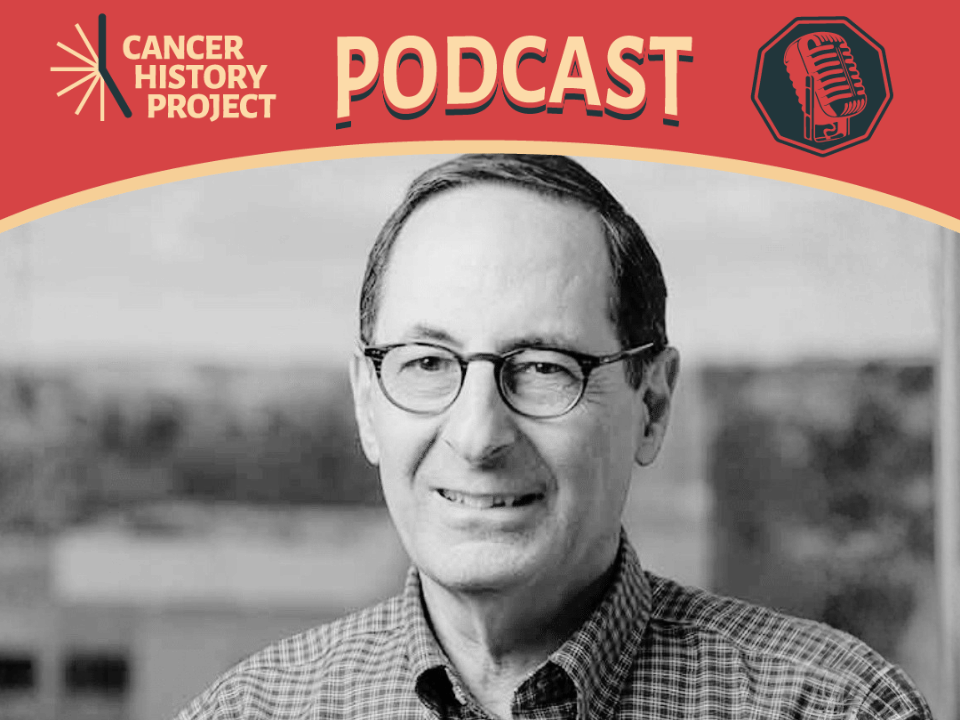
When Barnett Kramer joined the National Cancer Institute as a young physician in 1986, NCI was in the business of developing cancer screening guidelines. In the 80’s and 90’s, physicians across the country looked to NCI for guidance on the subject.
NCI based the guidelines on a consensus, a process which relies in part on anecdote and can be clouded by bias and personal experiences, according to Kramer, former director of NCI’s Division of Cancer Prevention, who pushed NCI to stop publishing guidelines.
“In my opinion, [the consensus process] is a statement of benefits without really clear quantification or statement of harms,” said Kramer. “It was very difficult for a patient or a clinician to achieve true informed decision-making if they are only exposed to what the benefits could be without the counterbalancing possibility of the consequences of screening.”
Kramer knew there was another way—systematic evidence review—which was utilized by another body gaining traction at the time: The U.S. Preventative Services Task Force. In his mind, NCI’s role is to develop the evidence, not establish guidelines.
“I consciously, purposely, got out of the business of guidelines because I wanted to get out of the political atmosphere of guidelines, stick to evidence, and defer to the task force,” Kramer said.
By the early 2010s, NCI completely pulled out of guideline-making and deferred entirely to USPSTF.
In this episode of The Cancer History Project Podcast, Reporter Sara Willa Ernst sits down with Barry Kramer, former director of NCI’s Division of Cancer Prevention to talk about a time before USPSTF and cancer screening guidelines based on systematic evidence review. As the task force remains sidelined, we now find ourselves in a similar spot—absent a body conducting systematic evidence reviews to inform policy.
Under the Trump administration, USPSTF has gone through big changes. Last year, HHS Secretary Robert F. Kennedy, Jr. fired key leaders. Then, in September, he appointed new members who critics say break with the guiding principles of the panel. The task force remains in limbo—having not met for more than a year.
The Cancer History Project Podcast is sponsored by City of Hope, the American Society of Clinical Oncology, the Sidney Kimmel Comprehensive Cancer Center at Johns Hopkins, and the University of Texas MD Anderson Cancer Center.
Related coverage in The Cancer Letter
- HHS Secretary Rebukes Task Force Guidelines On Breast Cancer Screening, Nov. 20, 2009
- Historical Perspective: Clarity Was The First Casualty In 30-Year War Over Mammography For Younger Women, Nov. 20, 2009
- Rejecting Data, Believers In PSA Screening Strengthen Guidelines, Launch Outreach, Sept. 11, 2009
- NCI Faced Pressure From Congress, HHS, White On Mammography Statement, April 11, 1997
- Cancer Policy: NCAB Recommends Mammograms Every 1 to 2 Years for Average Risk Women 40-49, April 4, 1997
- Congressional Report Says NCI Ignored Data, Procedure, In Changes To Screening Guidelines, Nov. 4, 1994
- NCAB Wants NCI To Avoid Setting Guidelines Regarding Health Policy, March 4, 1994
- NCAB Criticizes Coverage Of NCI Screening Statement, March 4, 1994
- NCI Drops Breast Screening Guidelines, Issues “Summary Of Scientific Fact”, Dec. 10, 1993
Transcript
Sara Willa Ernst: The U.S. Preventative Services Task Force is the authority when it comes to developing cancer screening guidelines. But that wasn’t always the case…
Not too long ago, physicians across the country looked to the National Cancer Institute for guidelines. And NCI arrived at these standards through a much less rigorous process: by consensus.
Fast forward to the late 1990s, USPSTF was alive and well—and exercising a formalized evidence-based approach. Barry Kramer, then-associate director of the Early Detection and Community Oncology Program in NCI’s Division of Cancer Prevention and Control, had an idea: maybe NCI should defer to the task force.
Under the Trump administration, USPSTF has gone through big changes. Last year, HHS Secretary Robert F. Kennedy, Jr. fired key leaders. Then, in September, he appointed new members who critics say break with the guiding principles of the panel. The task force has been in limbo—having not met for more than a year.
I’m Sara Willa Ernst, a reporter at The Cancer Letter… and on this episode of The Cancer History Project Podcast, I sit down with Barry Kramer, former director of the NCI Division of Cancer Prevention, to talk about a time before USPSTF guidelines… and how we find ourselves in a similar spot now, without systematic evidence review, as the task force remains sidelined.
The Cancer History Project Podcast is sponsored by City of Hope, the American Society of Clinical Oncology, the Sidney Kimmel Comprehensive Cancer Center at Johns Hopkins, and the University of Texas MD Anderson Cancer Center.
Sara Willa Ernst: Hi Barry, welcome to the Cancer History Project Podcast.
Barry Kramer: Hi, Sara. It’s a pleasure to be here with you and thank you for the invitation to talk with you.
Sara Willa Ernst: Absolutely. So we were talking previously about how NCI used to be in the business of breast cancer screening guidelines. Why don’t you kind of start from the beginning? What was, how long ago was that the case?
Barry Kramer: So I came to the National Cancer Institute from a university job in 1986. At the time, I was in the division of cancer prevention, where I spent my first four years at the National Cancer Institute. I had been trained in treating cancer patients. And so I spent the early part of my career in therapeutic research, clinical trials, and also in patient care.
And I refer to that as training and practice in the numerator. I was treating and my focus was on people who suffered from cancer and trying to come up with the best therapies and apply them to my patients.
However, by the time I got back to the National Cancer Institute, I was starting to recognize that my training was somewhat narrow—being restricted to the numerator—and I felt I needed a broader perspective of oncology. That is—training in the denominator or public health. That got me very interested in cancer prevention and in screening.
I began a master’s degree in public health, and I was awarded the degree in 1991, and that helped me get a position as the associate director of the Early Detection and Community Oncology Program in what was then the Division of Cancer Prevention and Control.
And so I went from focusing as a specialist to a broader view of public health and the overall management and approach to people that either already had cancer or those who were at risk of cancer in the general population.
In that master’s degree in public health training, it broadened my horizon. I often say that everything that I learned in the School of Public Health was new to me, but it should have been taught to me when I was in medical school and was not.
Sara Willa Ernst: Interesting. Yeah.
Barry Kramer: Because medical school and internship residency and specialty training were really preparing me for practice in that numerator, and I felt that was a restricted view. And that guides me even to the present. In the school of public health, I decided I would write my term paper in breast cancer screening.
Sara Willa Ernst: Okay.
Barry Kramer: I thought I already knew everything there was to know about breast cancer screening. I knew what all the so-called experts were saying.
Sara Willa Ernst: Okay.
Barry Kramer: And I knew the result of their consensus statements, which were uniformly positive in favor of screening, but only mentioned the benefits and never mentioned the potential harms or events that could occur in the general population when you use a broad-based screening program.
So as I say this was the first time I expanded my focus from pure benefit or statements of benefits to benefits and also the potential harms. Of course, the most common harm, which I learned obviously in the School of Public Health, were false positives, but that wasn’t the most serious.
It was when I first became aware of the term cancer overdiagnosis and that breast cancer screening in particular, but cancer screening in general, and medical screening even more general, could create overdiagnosis—that is the identification of conditions that were labeled as disease or cancer in this case, but were not rapidly progressing and were not destined to ever harm the patient. The person was now a patient, instead of being in the general population. They basically were transferred from the denominator to the numerator.
And so I learned that under those circumstances, since the test is not solely restricted to people in the numerator, it is offered to everyone in the denominator that I had better have a handle on the balance of benefits and harms. And that was how I evolved from pure enthusiast to a more discriminating person when looking at medical screening in general. And that transcends not just breast cancer screening, but obviously screening for other types of cancer, prostate, lung, colon, stomach, cervical, on and on and on.
Sara Willa Ernst: So this was kind of a revelatory moment for you in your education when you got your masters in public health after medical school.
Barry Kramer: Exactly. I got my master’s degree in public health about ten years—no, about twelve years after entering clinical practice and clinical research, after my specialty training.
And I realize that the perspective, the usual perspective of a specialist is more narrow than it should be in making recommendations or judging evidence for interventions that apply to the general population.
Sara Willa Ernst: And you’re saying that I’m just wondering if from personal experience as you were treating patients, that was your mentality.
Barry Kramer: Yes. That also led to my understanding that there is a danger in relying on specialists who spend their entire professional careers in the numerator when the test to be applied is to be applied to the denominator to the general population.
Because people who don’t have cancer at all won’t necessarily benefit at all from the tests, but they can be harmed. They can have false positives, they can undergo immense anxiety from those false positives, unnecessary workups. But the probably the worst harm, although it’s not as common, is overdiagnosis. That is the detection and subsequent treatment of people who are labeled with cancer. But whose cancers are so indolent—slow growing, or maybe even could regress—that they would never be bothered by the tumor late in life. And nevertheless, they undergo the rather toxic treatments associated with treatment.
An interesting aspect of cancer in general. It is for the most part a disease of aging. Your risk rises with age. That’s why many of the guidelines have starting age. And also, screening by its very nature, since it’s done in healthy people, has backloaded benefits (when there are benefits), but front-loaded harms. And so, for example, people who are 75 years old, 80 years old, may be subject to the harms of the process of screening, but would die of other diseases because simply of age and never stand to benefit, but only the harms.
And also as people age they can become more frail. They have other diseases that can harm their ability to tolerate some of the therapies from cancer, major surgery, radiation, and of course chemotherapy and immunotherapy.
More recently, another harm has come to the fore: an appreciation of financial toxicity. The management of cancer can be quite expensive and is an important cause of medical debt. And obviously you don’t want to be under the pressure of medical debt if you didn’t need the therapy in the first place.
Sara Willa Ernst: Mm-hmm. Why don’t you talk to me a little bit about when you started at NCI? I don’t know if you can give us kind of a general ballpark of when that was and what was the status at the time in terms of NCI and screening guidelines?
Barry Kramer: So when I came back to the NCI, I had trained in medical oncology at the National Cancer Institute. But when I came back to the National Cancer Institute in 1986, as I mentioned, I was in the Division of cancer treatment and treating patients and participating in clinical trials, of course.
But over the subsequent four years I decided I would really like to get broader training and asked my branch chief John Minna if he would send me for a master’s degree part-time. And thankfully, I’m grateful to him, he did, and I took a master’s degree in public health and that positioned me to become the associate director in The Early Detection and Community Oncology Program in 1991, which had purview over cancer prevention and cancer screening studies.
Over the 1980s, the National Cancer Institute had a long list of cancer screening guidelines. This was before the U.S. Preventive Services Task Force was fully up and running. And so the National Cancer Institute was really the sole component of the government at the time that was generating cancer screening guidelines. The head of that program was also a who was a clinician who had been trained for his whole career in the numerator and had a similar approach that I had when solely in the numerator.
In addition, he looked for consensus. So the guidelines were generated by basically a series of meetings and consensus and phone calls, and this predated the era of what I will refer to as evidence-based decision making, which requires a systematic evidence review. That approach in the 1980s rested on consensus.
Sara Willa Ernst: And just a quick question, this consensus approach—was it for just one type of cancer screening or was it across a bunch of types?
Barry Kramer: It was across a wide range of cancers. And so I thought there is a hazard in solely restricting yourself to getting input from specialists who had that same perspective that I had had when I got out of my training.
Sara Willa Ernst: Yeah. Why don’t you give us a very simple definition of these two approaches that you’re talking about? Consensus versus—did you call it evidence-based?
Barry Kramer: Yes. So evidence-based decision making was on the rise at the time. Its methodology was evolving and improving.
A consensus approach is simply getting people together who through their recall of the evidence and their experience and their personal sense about screening is relied upon to achieve a consensus that people will agree on. And that has its utility, but I think that the evidence based clinical decision approach has much more advantages. That is, it doesn’t rely on the biases and personal experiences, but rather relies on a true systematic search of the evidence, all studies, and then getting methodologists together to look at the benefits and the harms and explicitly state them all. That was another thing that was missing, in my opinion, in the 80s. That is statement of benefits without really clear quantification or statement of harms.
And in my opinion, it was very difficult for a patient or a clinician to achieve true informed decision making if they are only exposed to what the benefits could be without the counterbalancing possibility of the consequences of screening.
The other realization I came to was that screening is not a test. It’s not a single event. It is a process. And a lot can occur after that test. False positives that require workup, overdiagnosis that requires treatment, and so there are many downstream effects as part of the process. Any positive test has to be sorted out, and so that may take a number of diagnostic tests in follow-up and up to and including biopsies if there’s a suspicious lesion.
Sara Willa Ernst: Yeah. The test is just the beginning like—the screening test is just the beginning of a whole process.
Barry Kramer: Yeah, right. And back in the day when I was in medical school and in oncology training, I thought it was viewed more as a test as opposed to a whole process and all the consequences.
Sara Willa Ernst: I don’t know if you have this level of insight, but I’m wondering if you could paint a picture at all as to what the consensus process for some of these screening guidelines looked like. Was it just the branch director calling, you know, colleagues up on the phone, specialists, and getting almost a vibe of what the consensus was?
Barry Kramer: Well, it was a little more detailed than that, to the best of my recall, although I wasn’t part of that process. But it involved meetings of people that the head of the branch knew, respected, and many of them came from the numerator that I keep referring to. They were specialists in oncology, or radiology, or diagnostic, or testing for established cancers. And so they would have meetings and try to come to an agreement on each of the diseases. A number of representatives from specialty societies were there, and of course, they didn’t feel strongly about screening for a disease that wasn’t in their own personal numerator. And so they either signed on because they wanted to be part of the consensus, or simply said, ‘We have nothing to add here, and so we’ll just go with what others in the field.’
So let’s say a dermatologist might say, ‘Well, my interest is really skin cancer screening, so I’m not going to make any comments or certainly won’t object to the conclusions about prostate cancer screening, or mammography and breast cancer screening, or colorectal cancer screening.’
And after those meetings, not everyone agreed, is my understanding. I learned this once I came to the Early Detection Community Oncology program. And since not everyone agreed, the head of the branch who was responsible for developing the guidelines, would then get on the phone and talk to people and see if there was a compromise or if they could come to a consensus. And the end result was a series of guidelines across the spectrum of can’t available cancer screening tests.
When I arrived, I thought that the process should be a little more based on evidence. Of course, even in the consensus process, if you gather people, they will always say that their conclusions are based on evidence, so the term evidence-based decision-making means different things to different people. But to me what
Sara Willa Ernst: Yeah. What do you yeah, what do you see as true evidence based?
Barry Kramer: In my view, and I had been trained in the public health program to think this way, it starts with posing the questions, formal questions, and determining what the endpoints are that you are interested in, so that you don’t determine the outcome by changing the endpoints along the way.
If you find out that there are no studies at all that have the endpoints you’re interested in, as part some people have a tendency to say, ‘Well, we would accept something else instead of a mortality benefit.’ And so there the endpoints aren’t determined and fixed at the beginning of the process. Once you have fixed the questions and decided what the endpoints are, both benefits and harms, then you need to do a systematic evidence review.
And that requires expertise in and of itself. Most clinicians are not trained in systematic evidence reviews. And so you go to people whose careers are basically devoted to doing systematic evidence reviews, and meta-analyses, and combining evidence, and assessing the results from different study designs and try to put them together, both benefits and harms.
And so when I took over my job in the 90s, we decided that a better approach would be to drop the guidelines.
By then, I can tell you that the U.S. Preventive Services Task Force was coming on board. The task force was established in 1984, and they published their initial guide to clinical preventive services in 1989. And then there was a congressional authorization of the Agency for Healthcare Research and Quality in 1998, and they developed their current process for standardized systematic evidence reviews and presentation to a panel of methodologists and generalist clinicians in 2001.
And so over the course of the nineties, I successfully lobbied so that the NCI would not be in conflict with a process that I considered more rigorous and more evidence-based.
Sara Willa Ernst: So NCI was able to phase out the kind of consensus approach it was taking to guidelines. I’m assuming maybe that applied to lung cancer or maybe to GI cancers, but there was one cancer type the guidelines were NCI kinda held out. Can you tell us about that?
Barry Kramer: And so by the end of the 1990s, I successfully lobbied to have the NCI drop its guidelines with one exception: breast cancer screening was and remains an extremely charged area of screening, both professionally and politically. And so, at the time, the leadership of the Institute felt like maybe that was a bridge too far.
I left the National Cancer Institute and joined the NIH Office of Disease Prevention in the very early 2000s. And I became head of the Office of Medical Applications of Research, and that was the home of consensus conferences.
One of the early consensus conferences that I participated in was on screening for breast cancer in women under the age of 50, which was a very controversial topic at the time.
And I tried to help set up the evidence-based approach with a systematic evidence review, an unconflicted panel of methodologists, statisticians, and clinicians.
I realized just how politically charged breast cancer screening was because they concluded that the evidence was insufficient to routinely recommend mammography to women under the age of 50.
And it was so controversial that Congress held a hearing. They threatened the funding of the National Cancer Institute.
Sara Willa Ernst: Oh, wow.
Barry Kramer: It was one of the reasons why I realized that at least for a time we ought to steer clear of something that was literally endangering funding for the Cancer Institute.
I thought the not very veiled threat to cut NCI funding because of a conclusion that the politicians considered off-base. And so we retained it until as I mentioned Harold Varmas, who not only I mentioned was evidence-based and dedicated to making sure the NCI stuck to the evidence, he had a political steel spine. And so he was willing to say “evidence are us.” Rather than wading into the politics. And as you know, the task force has waded into that area as soon as they were given the charge by legislation that any guideline they came up with with a grade A or B evidence was to be funded by third-party payers without charge of the patient.
I predicted at the time good things could happen. That is, for the first time, people could have effective tests and no charge, but bad things could happen too. It became a political decision, and health policy was predicated. And I and others have felt that it’s better to separate the evaluation of evidence from the development of health policy because it is the policy makers who have the purview of what the budget will bear, and you know, listen to their constituents and so forth.
But at the very least, the safest thing to do, in my opinion, is to develop the evidence without the political pressure that comes with an automatic funding decision based on the outcome of the guideline.
Sara Willa Ernst: Yeah. And let’s be really clear. So you’re saying that your philosophy and your influence, you know, in kind of changing NCI and whether or not it is in the business of guidelines, the role of NCI is squarely to develop the evidence, not necessarily to develop guidelines and you think those should be separate roles.
Barry Kramer: Yes, I’ll add to that. The role of the NCI is to develop the evidence, of course to fund investigators on the outside around the country to develop the evidence, but also to disseminate that evidence. And that was the role of the Office of Cancer Communications under which the PDQ was run.
Sara Willa Ernst: So consensus guidelines were the status quo at NCI for a while, but clearly that’s not the case anymore. Why don’t you tell us the story of how they got repealed or how NCI stopped moving forward with publishing those guidelines.
Barry Kramer: Well the guidelines… My division director was Peter Greenwald, who also was trained not only as a physician but in public health. And so philosophically we were very aligned and he was willing to simply quietly take the cancer screening guidelines offline and defer by then to the U.S. Preventive Services Task Force, which had mounted a very rigorous process.
Sara Willa Ernst: Because you were kind of nudging him in the right direction or he already had some of these thoughts the same as you?
Barry Kramer: Well, I would say nudge may not be the right word, but I’ll use the word consensus. He and I came to a consensus.
Sara Willa Ernst: Okay. A consensus about the consensus.
Barry Kramer: About using a stronger methodology to issue guidelines and also an agreement that we did not want to be in the position of contradicting what an agency set up to do that very thing was doing.
Sara Willa Ernst: USPSTF.
Barry Kramer: The broad spectrum of medical conditions. They were judging not just cancer screening and cancer prevention, but screening and prevention across a broad range of health conditions. And they were using the same systematic structured approach, and both of us thought that that was a much more desirable way to judge the evidence and come up with guidelines. And also, since guidelines can be a politically charged topic, one agency doing it is probably sufficient.
Sara Willa Ernst: Okay, so NCI was in the camp of consensus, but then right alongside NCI was USPSTF, which was taking an evidence-based approach, and you and your colleague, you know, came to a consensus that it probably made sense that like leave that to USPSTF, you know, we’ll keep out of that business.
Barry Kramer: Yes. And likewise at about that time, there was a new branch chief in the Early Detection Branch, and he was clearly aligned philosophically with improving the methods that led to guidelines and allowing the agency that was specifically charged to do it across disease conditions to take it from there. And we did it, as I say, with the exception of breast cancer screening.
Sara Willa Ernst: One other question, when it came to making this change of distancing NCI from the consensus process and from publishing guidelines, do you remember if this was a gradual process or if it was something that kind of happened overnight, if it was relatively easy to convince the people or come to consensus with the people around you?
Barry Kramer: To the best of my recall, it was a few conversations, and achieving an agreement about who was best-suited, what methods were best, and that there was now a new agency and task force specifically charged with coming up with guidelines. And so I would say that it was a relatively easy agreement achieved, over a relatively few discussions.
Sara Willa Ernst: Okay. So you mentioned that guidelines can kind of be political. Can you talk about why that’s the case?
Barry Kramer: Yes. I think that disease screening in general is intuitively very appealing. Both to the clinicians, as I experienced personally before I took public health training, to most clinicians, to the public, and certainly to politicians.
David Ransohoff has pointed out that there doesn’t seem to be a negative feedback loop at all. Even people who are harmed by screening or overdiagnosed and undergo therapies, or have false positives and an anxiety-provoking workup feel grateful that they took the test because there is no recognition at the personal level that it was not needed or didn’t benefit them.
They’re grateful if the test is negative. They’re grateful if the test is positive and a workup ultimately shows that it’s not so. They’re grateful if a cancer is diagnosed and they are treated, even if they don’t live any longer as a result of that test. So at a personal level, it feels appealing. At an intuitive level, politicians feel very strongly about it, and they know that the public will be in favor of any rule they developed in favor of screening.
Sara Willa Ernst: So there’s kind of the appearance of we’re doing something to try to fix a problem, even if what is being done is maybe a waste of time or a waste of resources.
Barry Kramer: Well people are grateful no matter what the outcome is of taking the test. And that’s why even tests that are not recommended and those that have been shown to have no net benefit, or even have a net harm, the public sometimes embraces and policymakers embrace.
And of course, there are specialty societies who deal with the numerator—they know how bad the disease is that they deal with day in and day out. And so at almost any cost, they want to avoid those problems. And so they have a certain perspective, which is why heavily populating guideline panels with outcomes that are intended for the general population can come to a far different conclusion. They are heavily populated by specialists. And that’s part of the controversy now with the U.S. Preventive Services Task Force, where the generalists and methodologists are being taken off of the panel in favor of specialists that have a far different perspective. And their perspective doesn’t necessarily translate to the general population.
Sara Willa Ernst: Yeah. So just to give some context, USPSTF has not been meeting for over a year. They have been totally sidelined, and the previous members on the panel have been replaced and installed by HHS Secretary RFK Jr. And many of these people are specialists. So there’s a totally different composition and makeup of the panel compared to previous years of USPSTF.
Barry Kramer: Yes. And that is the philosophical issue that is at hand. I don’t know who has been placed on the task force, but I know that some very good methodologists and generalists have been removed. Of course, the task force hasn’t met in, I think, a year or more.
There are two downsides to that. Number one, the guidelines can become outdated. And number two, the existing guidance can be misleading if new evidence arises. And also the most evidence-based group doesn’t have a voice until the panel meets again.
Sara Willa Ernst: Yeah, and I’m pretty sure in the next couple of months, whether it’s November or December, is the usual next meeting and that is the first meeting in which this new panel exists. And so I am very much curious if they will finally meet when it comes to the next meeting, but we don’t know yet. It’s something that we’re kind of waiting and seeing.
Barry Kramer: That’s exactly right. So to move this story a little further with breast cancer screening, after the NIH Consensus Conference, when I was personal witness to how heated the feelings are about mammography, they were either at the consensus conference when the summary was revealed. There were specialists in the audience who got up and basically accused the panel of homicide, you know, of killing many, many women. That’s how heated the discussion got. It was very personal.
Sara Willa Ernst: Wow. Was that word used? Homicide, really?
Barry Kramer: They said you are killing, you know, thousands of women. They didn’t use the word homicide, which I guess is a legal term, but the sense is the same that the decision would lead to the deaths of women. And I know that the director of the National Cancer Institute was under intense pressure when the panel came out with its recommendations. So we stuck under those circumstances, especially, with the NCI guideline for screening women for breast cancer with mammography.
But we had already dropped the breast self-exam as part of the screening process as optional because there really was no evidence at all to show a benefit associated with breast self-exam. And there was considerable evidence by then to show the benefit of mammography. So it was easy to drop the breast self-exam component and retain the mammography component.
Now, over the next several years, as I mentioned, I was in the Office of Medical Applications for Research and the Office of Disease Prevention of the NIH for 10 years. But then Harold Varmus took the job as director of the National Cancer Institute. And he invited me to come back and become director of the Division of Cancer Prevention. It was an honor to be asked. I had actually retired when he asked me to take the job.
And through my discussions with him, I knew that he was not only a Nobel laureate in medicine and not only extraordinarily smart, but was very, very evidence-based.
And so I set up a meeting with him and talked to him about the fact that the U.S. Preventive Services Task Force had taken the lead. They had a guideline for breast cancer screening. The NCI just, out of historical and perhaps political interest, had one residual guideline and I hoped he would agree that it was time to get out of the guideline business totally, especially since the NCI at the time did not have a formal guideline process in place for mammography.
And so he completely agreed and that was it, and we deferred to the Preventive Services Task Force and did not look back.
Sara Willa Ernst: Yeah. Do you remember at all around what time this is, if you can speak to that?
Barry Kramer: That would have been shortly after he asked me to come back as the director of the Division of Cancer Prevention. And so I’m gonna put that as not too long after 2010.
But by then the PDQ was in full sway. In part, because of my own personal approach and my heavy involvement in the PDQ for many, many years.
The PDQ took on the role of judging evidence as it emerged. The task force examines the evidence periodically, so every few years they will take a re-look at the evidence and see if it’s sufficient, sufficient evidence has changed to change the guideline. The PDQ, on the other hand, was designed to have an ongoing look at the cancer literature across the management spectrum—adult therapy, pediatric therapy, supportive care, genetics, prevention screening.
Sara Willa Ernst: So for the PDQ, for the people that are putting it together, where are they looking? What types of information are they looking to?
Barry Kramer: Well the PDQ, much like the task force perhaps, has probably fallen on very hard times and they haven’t met either, because the infrastructure under the current administration has been dismantled. The infrastructure was run out of the Office of Cancer Communications. Each of the editorial boards had an editor-in-chief. I was on the treatment editorial board for many, many years, probably well in excess of 25 years, and I was asked to form the Cancer Screening and Prevention Editorial Board. And so I brought my approach to judging the evidence to the board. And it was my feeling that the role, the optimal role of the National Cancer Institute is to develop the evidence, fund investigators to develop the evidence, and then to summarize the evidence for the public and for practicing health professionals, but not to issue a guideline.
So as part of the PDQ with respect to cancer screening, there were reviews of emerging evidence. Every paper that came out that was relevant to a given editorial board was sent out to the board members and they made a judgment whether the evidence was sufficient to even bring to the board for discussion, so that they would automatically screen out anecdote—and there’s a lot of anecdote that favors cancer screening. They would screen out uncontrolled small experiences of 10, 20, 50 patients and so forth, and put their emphasis on one of two areas.
One would be randomized controlled trials that were internally valid and that could show both benefits and harms of the screening process. And also observational evidence, cohort studies where at least there were controls, even though it wasn’t randomized, and those are particularly useful to see whether a test is actually effective in the general population.
Randomized controlled trials are often restricted to the people who sign up for the study. And even though they have what we call high internal validity, and you can put high confidence in the result that is protected by randomization so to speak, as long as the study is done well, they show efficacy as opposed to effectiveness. Effectiveness is the effects good and bad in the general targeted population. And cohort studies are needed for that.
And so often, once you have a test that is proven to have a net benefit in a randomized control trial, it is advisable to then see if it extends to the general population through an observational study. And so that’s why both of the well-conducted randomized controlled trial and well-conducted observational studies, so-called epidemiology studies, were given primary emphasis in the PDQ, in the screening and prevention editorial board.
And that was its philosophy. Let me read a quote from the PDQ, which I think is very pertinent to that philosophy. The guiding principle of the editorial process for the PDQ Health Professional Cancer Information Summaries is that evidence, linked to an evaluation of the quality of the evidence, takes precedence over a consensus of current practice.
And in a nutshell, I think that is the philosophy of the PDQ until it had its last editorial board meetings over a year ago.
Sara Willa Ernst: How much does PDQ look to USPSTF for what it publishes?
Barry Kramer: Much like the USPSTF looks to all evidence out there when it’s coming to its conclusion and takes all input and even has input from observers, like I was an observer to the task force for probably 15 years, something like that. The PDQ looks across all publications in whatever form, including guidelines, and of course those that come from the U.S. Preventive Services Task Force, and looks to see if there’s any evidence in the task force evidence review that has been missed or needs to be incorporated into the PDQ.
And so the answer is yes, it was a, I would say, symbiotic relationship.
And I can give personal testimony to the rigor of the PDQ over—I’m sorry, of the task force—over the years and the strength of its systematic evidence reviews. The strength that the PDQ, I think, brought to the field was—we didn’t wait three years or four years or five years to update our assessment of benefits and harms. As it emerged, we incorporated it into the statement.
And so as an example, do you want to inter you know, ask questions or should I free associate for a minute or two? okay.
Sara Willa Ernst: You can free associate for a minute or two. I will come back and ask some questions, but you could do that first.
Barry Kramer: Right. So the PDQ approach looks formally at the benefits. And under benefit, it looks for the magnitude of effect. Is it a medically important effect, and that’s not the same as statistically significant, but is it large enough that it warrants the downsides and harms?
It looks formally at the study designs. For example, randomized-controlled trial versus observation and cohort. And under both of those, it looks at internal validity. That is, within that study, are the methods strong enough to give confidence in the validity of the results. It looks at the consistency of the studies. It’s rare that one single trial or one single cohort study can answer all the necessary questions, so we used to look across all studies and study designs to make sure that it was consistent and that we were not cherry-picking the evidence to suit our own personal hopes about the benefits.
And it also looks at external validity, which is for a test that is shown to have a net benefit in a controlled randomized study setting. Does that translate to the general population where people who may not be quite as healthy can participate, and people who have other comorbidities might suffer more harms than in the randomized controlled trial?
And that’s on the benefit side of the equation. On the harm side of the equation, they looked specifically for harms like the diagnostic workup and frequency of false positives, false negatives, where people were misled into thinking they didn’t have cancer when they do, and overdiagnosis, which entails not only costs, but entails therapy that may not be necessary: surgery, radiation, chemotherapy, immunotherapy. And under harms, and looked at we looked at the magnitude of the effect of the harms, and also again the strength of the study design and internal validity.
So in a nutshell, the PDQ was using, I think, methods that are similar to the task force, but was short of coming to actual guidelines. We say yes or no, and grading A or B.
The task force was charged with doing that. As I mentioned, I consciously, purposely, got out of the business of guidelines because I wanted to get out of the political atmosphere of guidelines and stick to evidence and defer to the task force.
Sara Willa Ernst: Yeah. To summarize some of what we’ve been talking about, you know, we said NCI, the role of NCI is to develop the evidence base and to disseminate the evidence base. And NCI is doing that right now. Tony Letai last week said that he paid out all of FY2026 extramural grants. You know, there were some delays and there was some slowness to it, but all the money’s out there to conduct that research.
But when it comes to the other side, which is not NCI’s role, but USPSTF, USPSTF’s role, which is to develop the guidelines, they haven’t met for a year. There’s not really clarity at the moment as to when they’re going to meet again. So this role of evidence-based guidelines, there’s a gap there at the moment. I’m wondering if you think it’s appropriate for NCI to get back into the business of guidelines because there’s a gap or how to address this gap because obviously there’s a need to update guidelines with the new evidence that comes out.
Barry Kramer: So of course now I have to rely on my own opinion. And my own opinion is: The NCI should not wade back into cancer guidelines. Because that’s when it wades back into political considerations.
The first time I heard the phrase “science are us,” I think, was from Sam Broder. Really our role is developing the science and communicating the science, not slopping over into policy. And so I don’t think the NCI should have a role.
Now there is an evidence-based group. The Canadian Task Force is still evidence-based, but I like the idea of having a task force that is devoted to making guidelines in the context of the United States healthcare system, as opposed to another country’s healthcare system. So ideally, I would say the U.S. Preventive Services Task Force would be reconstituted along the same lines that have been so successful over the previous decades.
What I would not like to see is them reestablished in name and dropping the rigor and systematic evidence approach that they took pride in over the years.
Sara Willa Ernst: I think hearing the history of how USPSTF became a respected panel of experts that look at the evidence base and, you know, kind of working in tandem with NCI just kind of provides a certain kind of weight to this particular moment when there is a gap or there is a question to the credibility of the panel.
I just really wanted to thank you for taking the time to explain all that history and I just wanted to check in if there was anything else when it came to this particular story that you wanted to cover or you felt like we didn’t we didn’t get to.
Barry Kramer: Well I alluded to this, maybe I’ll repeat it for emphasis. The PDQ would still play an important role because the task force looks periodically at all the evidence, but the PDQ has a more continually updated evidence base. And so as new studies come out and a lot of therapeutic studies come out, but also a number of screening studies and prevention studies come out, the PDQ was able to update its online statements when the task force had to wait another year, two, or three to update them.
So in terms of the utilities to the public and to practicing clinicians, I think the PDQ still played an extremely important role, even though it, I think correctly, didn’t issue guidelines.
Sara Willa Ernst: Yeah. And I’m wondering with PDQ being stalled, USPSTF not meeting for an entire year, if in some ways we’re kind of paused a year in the past because, you know, these two organizations haven’t been doing the work that they’re usually doing.
Barry Kramer: Yes. Well it would be a personal tragedy for me if the PDQ fossilized and lost its utility. It remains online and so the public can look at it, but my fear is that it is not being updated and the public may not be aware.
And the same is true with the task force to a different extent. They have a lot of catching up to do. There are a spectrum of guidelines across many medical conditions in prevention that are getting out of date. And so I’d like to re-establish them the way that they were constituted before with their rigorous methodology.
And I should also say that the two approaches are complementary, they’re not mutually exclusive. And my experience tells me, after being so active on the PDQ for decades, and also the liaison to the U.S. Preventive Services Task Force for decades, that their assessment of the evidence was extremely close. It was rare when they differed in minor details, which reassured me that the processes in both were sufficiently evidence-based.
Sara Willa Ernst: Well, I know this will be one of many, many conversations we have about PDQ and about USPSTF. We will continue reporting on it and asking questions and trying to get to the bottom of what’s going on. and so we will definitely be talking much more about those two topics in the future.
Thank you so much for coming onto the Cancer History Project podcast.
Barry Kramer: And I can’t end this without praising your role and the role of journalists in general in translating research findings from the Cancer Institute and across the board to the public.
Sara Willa Ernst: Well, thank you so much.
“I consciously, purposely, got out of the business of guidelines because I wanted to get out of the political atmosphere of guidelines, stick to evidence, and defer to the task force,” Kramer said.
By the early 2010s, NCI completely pulled out of guideline-making and deferred entirely to USPSTF.
In this episode of The Cancer History Project Podcast, Reporter Sara Willa Ernst sits down with Barry Kramer, former director of NCI’s Division of Cancer Prevention to talk about a time before USPSTF and cancer screening guidelines based on systematic evidence review. As the task force remains sidelined, we now find ourselves in a similar spot—absent a body conducting systematic evidence reviews to inform policy.
Under the Trump administration, USPSTF has gone through big changes. Last year, HHS Secretary Robert F. Kennedy, Jr. fired key leaders. Then, in September, he appointed new members who critics say break with the guiding principles of the panel. The task force remains in limbo—having not met for more than a year.
The Cancer History Project Podcast is sponsored by City of Hope, the American Society of Clinical Oncology, the Sidney Kimmel Comprehensive Cancer Center at Johns Hopkins, and the University of Texas MD Anderson Cancer Center.
Katie Goldberg: The Cancer History Project is an initiative of The Cancer Letter, the leading source for information on the issues that shape oncology since 1973. Learn more and explore our archives at cancerhistoryproject.com.