
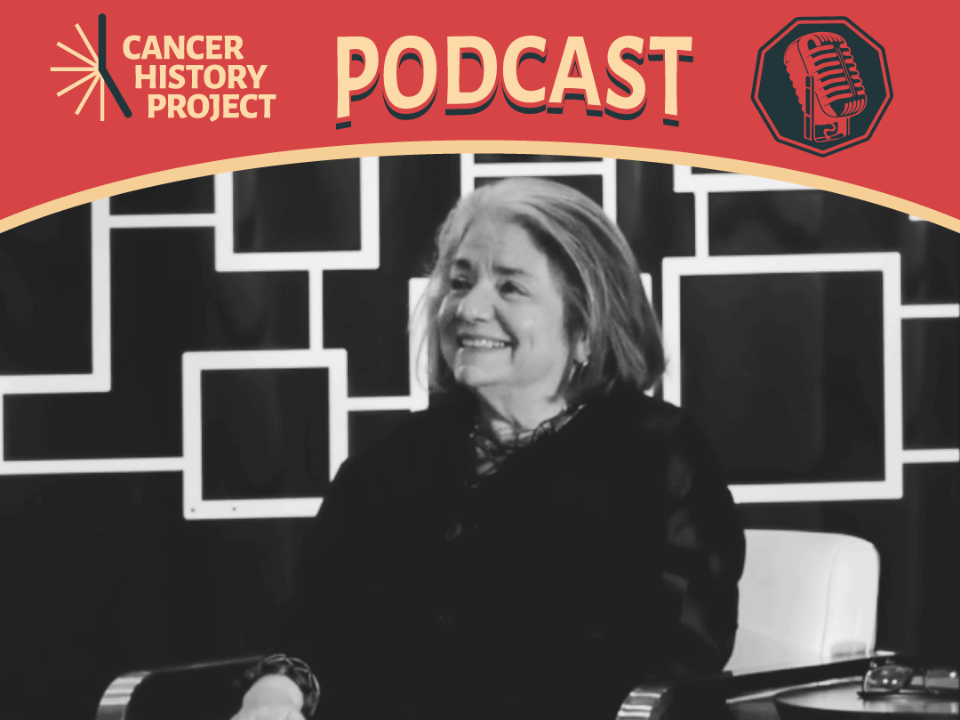
In the 1990s, Susan Love, who is remembered as a transformative leader in the breast cancer movement, was speaking in front of an audience in Salt Lake City.
These were the early days of what would become The National Breast Cancer Coalition. But at the time, the advocacy group was just an idea.
“We need to do for breast cancer what the AIDS activists are doing for AIDS. Maybe we should all take out our prosthesis and march topless to Congress,” Fran Visco, president of the National Breast Cancer Coalition, recalled Love saying during the speech. “We were really inspired by the AIDS activists.”
Love and Visco would soon become members of the founding board of NBCC.
Visco sat down with Paul Goldberg, editor and publisher of The Cancer Letter, for an armchair discussion at the NBCC 2022 Advocate Leadership Summit. They talk about the history of NBCC, breast cancer activism, and how a key moment in 1992 changed both of their lives forever.
Among NBCC’s accomplishments, towards the top was convincing Congress to create the Department of Defense Breast Cancer Research Program. This came after the “$300 Million More” campaign in 1992, which drew in advocates from all across the country.
Before the campaign, NCI’s bypass budget for breast cancer was only $100 million.
“We wanted it to be obviously more than that,” Visco said. “There were people around the table [asking], ‘Well, how much’? Someone said $2 billion. Someone else said, ‘Oh no, let’s just ask for like a million because we don’t want to make anyone angry.’”
“Then there’s a woman, Mary Jo Kahn from the Virginia Breast Cancer Foundation,” Visco continued. ‘She stood up and said, ‘I want to know what the scientists need.’”
Soon after, NBCC convened a hearing, asking scientists about their research needs.
“We took that information and then we did our own homework and we came up with an actual plan on how an additional $300 million more could be well spent,” Visco said. “Because you don’t want to throw money at a problem. You don’t want to just say $2 billion. And then that money’s going to be wasted because you don’t know how to spend it well.”
Speaking to Congress, Visco gave a speech that woke up The Cancer Letter’s Paul Goldberg, who had been napping while waiting for the cancer groups to speak.
“When this administration decided to wage a war, you found $7.5 billion to fund it,” Visco said, referring to the Gulf War. “Women have declared war on breast cancer and you had better find a way to fund that war.
“We will no longer be passive. We will no longer be polite. We can no longer afford to wait while Congress gets around to significant decent funding for breast cancer. We implore you. You must find a way to appropriate the additional $300 million for breast cancer research now. We can accept no less.”
This interview is available on Spotify, Apple Podcasts, and YouTube.
Related Articles:
- How 1960s activism shaped the movement that resulted in the DOD breast cancer program
- Susan Love on breast cancer activism in the 1990s
- Advocacy in Action: The DOD Breast Cancer Research Program
- Kay Dickersin: How NBCC started Project LEAD to teach science to breast cancer patients
- The National Breast Cancer Coalition’s Project LEAD Institute
- Susan Love, a transformative leader in breast cancer movement, dies at 75, The Cancer Letter, July 7, 2023
- How “Dr. Susan Love’s Breast Book” has remained the “bible” for women with breast cancer since 1990
- Breast cancer activists in the 90s got DOD to fund cancer research—now that program has been gutted, The Cancer Letter, March 28, 2025
Transcript
Katie Goldberg: Fran Visco is the president of the National Breast Cancer Coalition and a 30 plus year breast cancer survivor.
In 2022, she sat down with Paul Goldberg, editor and publisher of The Cancer Letter, in front of a live audience at the Advocate Leadership Summit in Washington D.C.
They talked about the history of breast cancer activism, including Fran’s memorable address to Congress in 1992. 30 years prior, that marked the beginning of a movement.
What follows is a recording of that live event.
Thank you to the Cancer History Project sponsors: City of Hope, the American Society of Clinical Oncology, the Sidney Kimmel Comprehensive Cancer Center at Johns Hopkins, and the University of Texas MD Anderson Cancer Center.
The Cancer History Project is an online archive of the history of oncology collaboratively curated by the institutions and people who shaped it. We have over 60 partners spanning academic cancer centers, government agencies, advocacy groups, and even the occasional podcast. Visit us online at cancerhistoryproject.com to dig through our archives. I’m your host, Katie Goldberg.
Paul Goldberg: So, thank you very much for letting me do this because that goes way back and I promise this will be… I’ll take about 30 seconds, maybe 60, but not more than that.
My job used to be really boring because back in the ’90s, I took this job really to help with… I was writing books and I needed to even out the cash flow and I was working for my then father-in-law. So, I was covering Congress and that was a bore.
And actually the most boring thing is appropriations because appropriations, basically the committees meet and they listen to testimony and basically it’s next, next, next. And I was waiting for the cancer groups to show up. And then, and this would be exactly July 29th, 1992. I actually ended up taking a nap. It was that boring.
Suddenly, I hear this voice and the voice was… And let me see, I can do this or you can do it, Fran. Would you like to do it? I think it’s better if you do it because that’s precisely the voice. On the bottom where I mark it. Yeah.
Fran Visco: Should I start?
Paul Goldberg: Yeah, bottom.
Fran Visco: When the men in suits all but destroyed the savings and loan system in this country, the nation’s economic stability was threatened and this Congress responded with billions of dollars. Because our cities are in danger of extinction, this Congress has found a way to appropriate emergency funds for the urban crisis.
When this administration decided to wage a war, you found seven and a half billion to fund it. Women have declared war on breast cancer and you had better find a way to fund that war.
You want me to go on? Go down here?
Paul Goldberg: Wherever the quote ends.
Fran Visco: Women refuse to fight with other diseases for which no funds are available. That would be going by existing rules and too many women die under those rules. It is not enough that we can all say “breast cancer” aloud. And it is not enough to say you want to help us.
We will no longer be passive. We will no longer be polite. We can no longer afford to wait while Congress gets around to significant decent funding for breast cancer. We implore you.
You must find a way to appropriate the additional $300 million for breast cancer research now. We can accept no less.
Paul Goldberg: All right. And that is precisely NBCC as it’s always been for the past 30 years. So, I woke up, I pushed the button, I recorded this on my tape recorder. I went over to Joanne Hause’s office at Dupont Circle a few days later. And this just became people understood something enormous, including me, that here is finally a group of actual advocates who actually are a lot like say ACT UP. So, there it was.
So, this is the beginning of how I come into this, but I actually caught, this is where you tell the world that you exist. What happens before? What did they not see?
Fran Visco: Well, I guess it was actually in 1991. And as you know, a group of women, a small group of women, it was actually Susan Love and Susan Hester got together and said, “We need to do for breast cancer what the AIDS activists are doing for AIDS.” And Sue Love had written the Breast Book and that became like the Bible of the breast cancer patient world. And she was speaking across the country about her book. And she was in Salt Lake City, Utah, I think. And she was speaking to an audience about how we really have to mobilize the AIDS activists and maybe we should all take out our prosthesis and march topless to Congress.
And when she got off the stage, these women in Salt Lake City came up to her and said, “Where do we sign up?” And so, she and Susan Hester thought, “Okay, well, I think we might have something here.” And they reached out to Amy Langer, who at the time was the head of a group called NABCO. And the three of them pooled their people resources and their list, got a few more people together, some groups from around the country, and there were about eight of them altogether. And they came up with the idea of maybe we should have a coalition, a grassroots coalition, a political movement to end breast cancer. And they then contacted the organizations on their list.
The organization I was volunteering for at the time, the Linda Creed Breast Cancer Foundation in Philadelphia was on that list. And we got the invitation. And I was on their board and I was asked to go with the president down to Washington to this meeting where this small group of women presented the idea of a coalition of organizations with a mission and to focus on research, access to care and influence.
And I have to tell you, I was a partner in a law firm at the time and had been diagnosed in 1987. And I was always a political activist in a lot of movements. And I was happy being on the Linda Creed board and trying to help as much as I could. But when I went to that meeting in Washington, sat around in that conference room and heard about this idea, I’ve said this before, it was my epiphany. “Okay, this is what I want to do about my breast cancer.” My political activism, my legal training. I wanted to bring all of that to the breast cancer movement and help create a movement. And so, that was the beginning of NBCC for me.
But the idea of the coalition predated me. So, they had gotten together several months before, but the people sitting around in that conference room, the question was posed, “So, here’s our idea. Who wants to be a part of it? Which groups want to be a part of it?” I don’t remember how many groups were represented, but quite a few. “Which groups want to be a part of it? And who wants to be on the first board of the coalition? If you do, send a letter.” Now that’s the amount of thought that went into figuring out who was going to be on the first board of the coalition. Send a letter. But Linda Creed sent the letter and we became part of the founding board of NBCC. So, that’s really what led up to it. But we were really inspired by the AIDS activists.
Paul Goldberg: If you had just gotten $300 million, which by the way, this is a very radical idea because at that time, the bypass budget of the National Cancer Institute for breast cancer was a lot less. I think it was-
Fran Visco: Yes, it was about 100.
Paul Goldberg: … $100 million. So, that’s what they thought they could spend. And suddenly there’s $300 million more. So, everything’s just changes immediately. And my job becomes less boring. Not boring at all, in fact. It hasn’t been boring since. So, that would have been enough if you had done that. But you didn’t and you did more. And if you had gotten DOD money, that would have been enough. If you had gotten into patient advocacy training, that would have been enough. But there’s more and more and more. So, why don’t we just go with the $300 million more and how it starts DOD?
Fran Visco: So, what happened is we were sitting. The board, we used to meet as a board once a month in different places around the country. And this particular meeting early on was being hosted in my law firm. So, we were in Philadelphia sitting around the table in the conference room. And we were talking about how we wanted to… Our first big campaign would be to get Congress to increase appropriations. As Paul pointed out, appropriations at the time was about $100 million for breast cancer. And we wanted it to be obviously more than that. And there were people around the table, “Well how much?” So, someone said, “Two billion.” And someone else said, “Oh no, let’s just ask for a million because we don’t want to make anyone angry.” And then there’s a woman, Mary Jo Kahn, from the Virginia Breast Cancer Foundation, she stood up and she said, “I want to know what the scientists need and that’s the money we should go for.”
And so, we decided to have our own research hearings. And we invited scientists from across the country to Washington DC to a hearing. It was at the Quality Inn somewhere in DC to tell us what the areas of breast cancer research were that were promising, but underfunded. And we took that information and then we did our own homework and we came up with an actual plan on how an additional $300 million more could be well spent. Because you don’t want to throw money at a problem. You don’t want to just say, “Two billion,” and then that money’s going to be wasted because you don’t know how to spend it well. So, what we wanted to know was what is the amount that can be well spent? So, we’re not wasting money, but we’re focusing. You spend a lot of time trying to figure out how to spend the money. We didn’t want to do that. What is the amount that can be well spent?
And so, that was $300 million more. And we took our $300 Million More campaign to Congress. And Joanne was consulting with us at the time. And she came into a board meeting one day and she said, “Okay, you made your point, $300 million more, but now what will you settle for?” And I remember looking at her saying, “No, we’re not compromising on that number. That’s a real number. We did our homework. That is the number.” And so, we went up to Hill with the $300 Million More and I’m going to try to make this very short, but we ended up, Tom Harkin at the time was the chair of certainly the DOD appropriations subcommittee and I think the appropriations committee at the time. And he came to us and he said, “I can get half that money in the NCI budget, but there is a cap. So, I can’t get more than that.”
But he always introduced something called a transfer amendment that would transfer money from the defense budget to the domestic budget because defense had so much money. And he would introduce it every year, $4 billion for women’s issues and children’s issues. And it never passed because in order to transfer, you needed a super majority. And Tom said to us… No, we said to Tom, “Put the money in your transfer amendment and we’ll try to help you get that passed.” And he did. He put, I guess it was $220 million in the domestic budget for NCI, and then $210 million in the defense budget and the transfer amendment. Total $410 million, which would then be $300 million more.
And so, when the transfer amendment came to the floor of the Senate, we had already been working with Al D’Amato, who was a fairly conservative Republican Senator, but he was up for reelection and he needed a women’s issue he could run on because he was anti-choice. And breast cancer was a big issue, certainly on Long Island and in New York. And so, he thought, “Women’s issue, I can run on this.”
So, he decided he was going to support the transfer amount. So, Tom introduces this transfer amendment and the transfer amendment failed even without support. But then we had worked with Tom so that the $210 million would not be part of the transfer over to domestic, but it would stay in DOD. And that only needed a simple majority. And so, that passed because Al D’Amato and the Republicans were supporting it too.
And then when the rest of the senators saw that this thing was going to pass, they all said, “Well, we can’t be seen voting against breast cancer.” So, they walked back in the room and they changed their no votes to yes. And it ended up passing like 89 to four, but that’s not the true story. I just told you the true story. But since we only needed a simple majority, it passed and we ended up with $300 million more. And do you want me to tell you about what happened with the DOD meeting?
Paul Goldberg: Please.
Fran Visco: So, here we are. We had $210 million in the defense budget for breast cancer to launch a peer reviewed breast cancer research program, that was the wording. And then we had $220 in NCI, and they had only spent $100 million before then. So, I took a group of advocates and we went to meet with the then head of NCI. And we said, “Look, we have all this new money for you. What are you going to do differently?” And his response to us was, “Well, we’re a huge battleship and you can’t turn a huge battleship on a dime.” And then I took a smaller group of advocates to Fort Dietrick, Maryland to meet with the general and the colonel and the major. And you’ve heard me say this many times. I mean, I thought they were going to look me up, saw what I did in the ’60s and never let me off the base.
So, here I am sitting in a conference room with General Travis and Major Young and Colonel Smith and all of this. Okay. But it was a whole different atmosphere because General Travis, it was not long after Tailhook. And so, he felt, and he was right, the Army had something to prove to women. And this was an opportunity for them to do that. And so, I remember he said, “You want to do something different? We’re going to do something different. You want a seat at the table? You can have a seat at the table. Ladies, we’re going to lead you into battle and we’re going to win this war.” Those were his words. And so, we walked out of that room and we said, “You know what? Everybody’s expecting the money to go back to NCI now.” And even the head of the NIH sent a letter saying, “Okay, we’re going to get all this money from defense. Make plans on what you want to do with it.” And we said, “I don’t think so.”
And so, we then fought to keep it in the defense department. And let’s see how this goes. And you all know what happened after that. It was a huge success. And every year, like we’re going to do Tuesday, we go back and lobby to continue it. And we did get the seat at the table. And that’s because the NBCC representatives on the panel that oversees the program asked that that happen and said we need to have advocates part of peer review, part of programmatic review and all of that. And it wasn’t so easy, but we ultimately won that battle too. So, there’s a lot more to this story, but I don’t want to take the whole time talking about the DOD program.
Paul Goldberg: No, it’s great. I remember, I think it was, it must have been Colonel Travis who said to me in the cancer letter, “We’re leaning forward in the foxhole.”
Fran Visco: I’m not sure how to read that, but okay.
Paul Goldberg: It was leaning forward. God knows. I loved it, so I just used that. But I mean, there’s also, when you have advocates who are raising awareness, all they have to do is know how to conduct fundraising activities, be it bake sales or bike races or any kind of races. But also advocates can be a force for good or a force for ignorance because I mean, look at the prostate cancer guys used to walk around in groups of three and ask people of a certain age at the airports, “What’s your number for pushing PSA?” So, God, help us all. But when you have advocates who have won with hard work by leaning forward in the foxholes, a seat at the table, you need to have advocates who really know what the heck they’re talking about. And that brings us to Project LEAD.
Fran Visco: So, that’s exactly what happened. We said, “If we’re going to have a seat at the table,” I mean, I was a lawyer, there were other people who were part of the coalition who were accountants or teachers or worked in the home. What did we know? But we wanted to know because we didn’t just want a line on our resume, we wanted to make a real difference. And so, Kate Dickerson, who was on the founding board of NBCC, she was an epidemiologist, a breast cancer survivor. And she said, “Well, we’re going to educate the board.” And she started bringing people in to do lectures for the board. And I remember saying, “Well, if this is good for the board, which it is, we need to bring it more broadly.” And we were fortunate to get a grant to enable us to do Project LEAD, which of course is science training for the advocates.
Not just so they could better understand what they read or feel better about themselves, but because we wanted to influence. It was research access influence. We wanted to influence breast cancer research. Setting the agenda, how the money is spent, what the questions are, how they’re going to be answered. And we knew we had to educate ourselves in order to do that. And so, we had Project LEAD. And the very first Project LEAD was in the mid ’90s. And when we were looking for videos for this summit, we came across this video. It was way too long and way too old talking about Project LEAD. And Carolina is in it and a lot of people who… But it was telling a lot of stories about how we got to Project LEAD and the design of Project LEAD. And we knew in the beginning it had to be basic science and then epidemiology, if you will, and some applied science.
And so, we were lucky. We had a large group of pretty well-known scientists who decided to come to a meeting we held to help us design the curriculum. And those of you who are in the world of advocates, in the world of research, you’ll understand this. But when we went to that meeting, the basic scientists had the outline and the details of their part of the curriculum finished by 1:00. And by 2:00, the epidemiologists and they were still arguing over what to call their part of the curriculum.
But anyway, it turned out to be, I remember the very first Project LEAD, Paul. We tortured people. I mean, we really did. It was like we had them there morning… I remember Pat Barr, she was laying on my bed like this with her arms spread out. And I was like, “No, we can’t let them. What are they doing now? What do you mean it’s after dinner? They have to do more.” And so, it was really torture, but it was also, at the same time, magic. It was just magical the way it worked and the way it all came together and how many advocates wanted to be a part of it and how many scientists wanted to be a part of it. We did Project LEAD clinical trials, quality care. Other groups have started. The Parkinson’s groups give us all credit for their education programs because we helped them in the beginning to figure out what it should be for them. And theirs have been very successful too.
Paul Goldberg: Wow. Pat Barr, you mentioned.
Fran Visco: Yes.
Paul Goldberg: Didn’t she come up with the idea of modeling it on the moratorium? Is it Moratorium Movement, the movement in colleges where kids cut classes and learned about the Vietnam War?
Fran Visco: Well, I don’t know. I don’t remember that part. It’s a good one, so we can make that part of the story. I’m okay with that.
Paul Goldberg: It’s in the book that Otis Brawley and I wrote, so I-
Fran Visco: I remember reading it. So true, yeah.
Paul Goldberg: It must be true. Who knows? But yeah. So, can we talk more about… Well, right now, the word that everybody uses, and it’s actually more than just a word that’s a very important point, which is cancer disparities in outcomes. And it’s interesting because really, the first paper that, not necessarily uses that word, but points to disparities comes out in 1971. So, Freedman, Freeman rather, Harold Freeman’s paper. And so, really, surprise. But NBCC was very active in the disparities almost immediately with the Breast and Cervical Cancer Treatment Act. How did that come up and why was it important?
Fran Visco: I can tell you specifically how that bill came up, but I would say the disparities issue, as I said, our goals always were research, access, influence from day one. And so, access means everyone has access to the right kind of care. And access means they can get it, they can afford it, somebody’s paying, all of that. And evidence-based. And we spent a lot of time figuring that out. And then one day, one of our board members from California, who was a wealthy white woman, and she said, “There’s a problem that I think NBCC can help address.” And she said, “There’s the CDC Breast and Cervical Cancer Screening.” It was called Prevention Act at the time, but it’s Screening Act. “And they are paying for mammograms and pap smears for uninsured individuals, but there’s no treatment component, so these people are having to find charity care to fund their treatment. And we think we can fix that. NBCC should fix that.”
And so, the board discussed it and we decided to take that on as one of our policy priorities. And we did draft legislation and we ended up… There was opposition to it. There was opposition to it from other nonprofit groups were opposed to that approach. And there was some opposition in government and certainly Congress was a little uneasy about it. Are we expanding, what’s the word? Giving things away to people. We’re expanding those kinds of programs and we shouldn’t be doing that. Entitlement programs. But we persisted. I mean, we were very… And we convinced the Clinton administration to become an ally, to get on board. And we had some very strong members of Congress then to get on board. And then we had our advocate network, of course, was really on board about it, but it was a clear gap, a public policy fail.
Because one of the arguments made against us was, “Well, what about all the other diseases? Should we have laws now getting treatment for those?” Well, the answer is yes. But this particular approach has to do with fixing an existing policy, an existing law that is bad because you’re spending government money to find cancer that you’re not going to do anything about. And so, you need to fix that.
And so, we ended up… I remember Bill Clinton did a couple of the Saturday radio shows on it. And I have a funny story connected to that, but the second radio address he did, I was invited to the Oval Office for him to speak. And I had also been invited to speak, and this sounds self-aggrandizing, and I don’t mean it that way, I’m only invited because of NBCC to speak in the Elysee Palace in Paris because of the treaty against cancer. Do you remember that?
Paul Goldberg: Yes.
Fran Visco: And so, I was chosen to be the patient representative at that. And when John Podesta called me to invite me to that Oval Office, and I remember saying, “I can’t come.” And he’s like, “What? Wait, you can’t come to the…” I said, “Because I’m going to be in the Elysee Palace with Jacques Chirac.” I said, “Whoever thought that me, little Franny Visco from West Philly, is having to choose between the President of the United and the President…” And he said to me, “And we will never forget who you picked.” That was one of those surreal like, “How did I find myself here?”
So, anyway, we got the bill, but the bill was not a mandate. So, what it did was it moved those whose cancer was found through the screening program into Medicaid for all their healthcare, not just breast cancer. But it’s not a mandate because you could never get a mandate enacted back then or even now, less so. So, it was an opt-in. So, that meant we had to work to get every state to opt in to the program. And we were successful. Our advocates were successful in making that happen too in record time.
Paul Goldberg: And there’s a certain amount of money and it runs out rather-
Fran Visco: Yes.
Paul Goldberg: But it’s there.
Fran Visco: Medicaid, yes. It’s still there.
Paul Goldberg: It’s still there. Yeah. Well, it’s been, what, more than 30 years. How has breast cancer changed in this time? But actually, maybe I should even broaden it and ask how has advocacy changed? You can still keep it to breast cancer or go broader, whatever you prefer.
Fran Visco: So, it’s constant. The advocacy is everywhere, but it’s not good, educated, informed, strategic advocacy. So, what happened, in the world of cancer certainly, was that the idea of advocates at the table then became, “Oh wow, this is a great thing. We should do this in part because then we can use these advocates to get more money for us from Congress, but we’ll get them to the table.” But they didn’t want NBCC at the table for the most part because we weren’t just there just to knock. We had Project LEAD, we knew what we were talking about, we asked difficult questions, we wanted to change the way things were done. Most of the scientific community, that is not what they were looking for. They were looking for the advocates who were just thrilled to be there and would say, “Yes, you want us to go to Congress and get more of that? Yes, yes.”
And so, advocacy became more that than it did in the beginning when it was really more activism and strategic advocacy. And then I think the other thing that happened was that the advocacy community, even within breast cancer, lost its sense of urgency. It’s hard to get beat up every day, year in and year out. It’s really hard. And people get tired of that. And when we had our advocates creating relationships with their members on the Hill, and it got to the point where you’d say, “Okay, we need this senator on this bill and you need to go push him or her to get on this bill.” And even some of our really seasoned advocates were like, “Well, I don’t really want to damage my relationship.” But what good is your relationship if you can’t push it as much as you can to accomplish something? It’s not just getting invited to the breakfast with a senator. It’s really getting the bill enacted into law.
And so, even the breast cancer movement, it’s exhausting. And now breast cancer itself used to be, and half the people in the room will know what I mean, I think, above the fold in the New York Times. Now there’s no more fold. But then it was an issue that was covered all the time and talked about, and it was a priority. And now there’s so many issues. And breast cancer, it’s a victim, to some extent, of its own success because a lot of the public thinks we’re in a much better place than we really are. And so, the urgency is gone and we work hard to try to bring that back.
Paul Goldberg: Yeah, no, I’m just purely egotistically hoping that there’s a way that somebody could find a way to steal your scheme off or how to get it done, your action plans, and just scale it up, bottle it. But it’s not happening.
Fran Visco: No.
Paul Goldberg: And I don’t see-
Fran Visco: It’s not easy to do.
Paul Goldberg: No. No, not at all. ACT UP, you needed you, you needed Pat Barr, you needed-
Fran Visco: Carolina, yeah.
Paul Goldberg: Yeah. Oh God, Carolina, of course. Yeah. And that is the next question to some extent, because when you do engage in real advocacy, you don’t know whom you’re going to touch and whose life you’re going to change. I mean, I can say this because you did change mine because I didn’t leave this field because it was becoming interesting suddenly. But there’s a whole lot of people, all the advocates, of course, who are here, whose lives NBCC has touched. And then there’s also somebody named Hillary Rodham Clinton?
Fran Visco: So, we were very lucky to have the relationship that we had with the Clinton administration. And I know Paul and a number of you have asked me to tell the story of how that started. And so, it started during 1992, the Clinton campaign and Bill was running and there was a press conference scheduled in Williamsburg, Virginia that Bill Clinton was going to give on health. And a number of the health groups were invited and Joanne got us invited to that meeting. So, we were going to go to this press conference. And then Bill Clinton famously had his problem that he couldn’t speak with his throat. So, the press conference was canceled, but Joanne was working things. And we were told that Hillary Clinton wanted to meet with us, was willing to meet with us. And so, it just so happened that this was happening when we were having a board meeting in Washington DC. And so, we rented a bus to drive us, the board, from Washington DC down to Williamsburg, Virginia to meet with Hillary Clinton.
And I have to say, we don’t have much money now, but we really had no money back then. And so, we got the best bus we could afford. And maybe three quarters of the way to Williamsburg, the bus broke down on the highway. And this was pre-cell phones, no cell phones. And the radio didn’t work on the bus. And so, we’re sitting in the bus and we’re like, “Okay, we’re going to hitchhike.” So, we get off the bus and here are these women, mostly in their 40’s, dressed up to go meet Hillary Clinton in Williamsburg, standing by the side of the highway hitchhiking. And Sharon Green from Why Me? that existed at the time, and I forget, someone else said, “Well, Fran, it’s most important that you be there, so you should get in the first thing.”
First thing that stopped was a pickup truck. And it was a migrant farmer, the pickup truck. And we told him where we were going. Sharon and I got in the cab of the truck and the guy said, “My seatbelt doesn’t work, but the police may see me, so will you hold it across you?’ So, we have the seat… Holding the thing. And we’re on our way to Williamsburg, Williamsburg Inn, and we get to the exit for the Williamsburg Inn, and he wasn’t sure where to go for the Williamsburg Inn. No GPS at the time. So, a sheriff’s car pulls up alongside us. So, Sharon rolls down the window and looks out the window and says, “Excuse me, we’re on our way. Can you tell us how to get to the Williamsburg Inn?” Well, the sheriff, big grin goes like this, I look in the back seat, there’s three of our board members.
So, the sheriff’s car, “Follow me.” Turns on the blue light. And the pickup truck, and then there was this beat up old red car, kid coming back from a Grateful Dead concert. And we had some of our board members. So, it was this ragtag parade of cars pull up at the Williamsburg Inn and climb out. And we’re there, I didn’t even have time to go to the bathroom. And Hillary’s coming around the corner with Linda Byrd because her husband, she was the First Lady of the Commonwealth of Virginia at the time, coming around the corner. And we go and we sit around the table. And her people said to me, “We’ll give you a signal.” We had maybe 40 minutes, something like that, “We’ll give you a signal.” So, we’re around the table. And on the bus on the way down, I was giving people roles like, “You speak about this issue, you speak about that issue.” And so, we went around the table and we were answering her questions, but then we were doing our thing, so-and-so speaking about access, research, all of this.
And then someone said, “I’d like to say something.” And I said, “Oh, sure.” And she was very powerful. She said something. She was clearly very ill. And then I got the signal, and then someone else said, “I’d like to say.” I said, “I’m sorry, we’re running out of time.” And Hillary said, “Oh no. No, no. I want to hear what everyone has to say.” And everyone got an opportunity to say something. And then when she got up to leave, she went around the room and she stopped and spoke to every person. And I was standing at the doorway and she came up to me and she said, “I will never forget that you did this for us.” And I’m thinking, “I did this for you? Do you know what an experience this was?”
And then after the election, I got a call from someone in the administration saying the first lady had asked her to call and wanted to know if I wanted to be appointed to a committee or something. And I said, “Well, I had been nominated for the president’s cancer panel, but there’s only three people on that panel.” And they said, “Okay, thank you.” And next thing I know, I get word that I had been appointed to the president’s cancer panel. And then from that experience in Williamsburg, and during the transition, we were trying to talk. We would talk to people and they’d say, “Oh, you were the people in Williamsburg.” And Bill’s mother had breast cancer and died of breast cancer when he was in the White House, but we just developed this amazing relationship with the administration, but particularly with her. She was always there for us. When the Pentagon didn’t want to spend the DOD money, we contacted Hillary, who told her husband, and then a letter went to the Pentagon, “You are spending that money.” So, it was amazing.
Paul Goldberg: And she showed up with Project LEAD.
Fran Visco: Sorry?
Paul Goldberg: She showed up at one of the NBCC conferences.
Fran Visco: Here. She came to this conference a few times.
Paul Goldberg: Right, yes. Advocacy commitment.
Fran Visco: And I remember her aide was telling me for one of them, they were meeting with some big wigs or something. And she said, “You know what?” She said, “I have to go. I have people who are sick waiting for me.” And she left to come here.
Paul Goldberg: Yeah, and I was there with my tape recorder. The same one, same one. So, whenever the word deadline comes up in cancer, I see red or used to. I’m becoming… I’ve calmed down as I aged. But the entire National Cancer Act, people were talking about having the thing cured by the bicentennial. And then there have been some other folks making really very responsible statements about it. And then the word moonshot really got me really upset first. Then later I accepted it. There was also an NCI director who was going to get cancer cured by the year 2015. What are your thoughts on deadlines? When can you use them responsibly? And we have one going now really with the Biden administration. And if you veer off into ARPA-H, I will not complain.
Fran Visco: So, clearly, we launched a deadline in 2010 to end breast cancer by 2020. The difference with our deadline campaign was that we actually had a strategic plan, a very specific strategic plan in order how to achieve it. And in some respects, we were naive because I think we believed, and we did believe that with a strategic plan, with a powerful grassroots advocacy movement, with a powerful message, it was a thoughtful approach to achieving a goal in a certain period of time. And people react much better to a deadline than they do “someday do this.” And we thought money would come. We thought people would, they’d pay attention and they’d want to help us get there. And that didn’t happen. And you can’t do something like that without a lot of money. And you’ve always had the dilemma, “Well, should I wait for the money? Should I do this?” And you can wait for the money forever, but we were urgent, urgent. We wanted to get this done.
But I’m very proud of the deadline campaign and what we did. And I will defend it any day against all the other attempts at moonshots and deadlines because we really… Everything else I’ve seen has been, we’re bringing people maybe together to do what they’re doing already. And we are saying, “No, we’re changing everything. This is what we need to do. And this is what it’s going to take to get to the end of breast cancer.” And we helped make that happen. And did we end breast cancer by 2020? No. But we ended up changing a lot about research and approaches in the breast cancer research community. We ended up with being very close to phase one trial for a preventive vaccine, and we were the first ones out there with that in breast cancer. And so, we accomplished a great deal through the deadline campaign.
What I see now with the moonshot and what I saw when Joe Biden was vice president and we participated in some of the moonshot work was what I said earlier. Joe Biden has understandably a great deal of respect for the traditional science community. And so, I saw the traditional science community, again, talking about, “This is what we’re doing. And now we’re going to tell this person that we’re doing this. And then this person says what they’re doing and then this and this and this.” And there was never a real synergy or there was never ever an understanding that maybe we should be doing this differently because it hasn’t worked so far.
And I’m seeing that now with ARPA. We worked with DARPA when we set the deadline campaign. I went to DARPA, the head of DARPA, and asked, “This is what we want to do. What do you think?” And they were very supportive. The only thing they said was, “Don’t go to Congress and ask them to make us do it. But we think you have the right idea.” They gave us some advice. And the idea of having an ARPA for health or an ARPA for cancer is exciting, if it were like DARPA. And it isn’t now because now it’s going to be under the National Institutes of Health. And that’s not going to change things. I mean, it’s just going to be, again, people doing what they do and continuing to do what they do, just maybe talking about it more, but nothing really changes.
Paul Goldberg: So, basically project management approach works. Having some kind of a strategy behind it that’s an overarching strategy works.
Fran Visco: You mean with ARPA?
Paul Goldberg: In terms of setting goals and deadlines.
Fran Visco: Yeah. No, but I think there’s a key ingredient that you haven’t mentioned. And that is being bold.
Paul Goldberg: Yeah.
Fran Visco: I mean, all of that has to be directed toward things that people say, “What are you nuts? You can’t do that.” But you know that’s what you have to do if you want to move forward.
Paul Goldberg: Yeah. And I think you said that to me probably sometime circa 1995, that a scientist will say, “No, this can’t be done.” And an advocate says, “I don’t care.”
Fran Visco: Right. We’re going to figure it out.
Paul Goldberg: Figure it out.
Fran Visco: Well, when we did the deadline, I mentioned in my opening remarks about Nature, the publication, when we talked about the preventive vaccine, and they said we were misguided. And they said it was bad because we were promising something that scientists probably couldn’t deliver and we were going to disappoint the public and turn the public against science. And I thought, “I mean, wait, that’s the way scientists think? Don’t promise things that might not happen? Don’t promise things that are different from what’s happening now, from what we already know we can do. That’s not what I thought science was. I thought it was the opposite of that.” So, yes.
Paul Goldberg: Do you think you’ve changed the culture of science? I think you have actually.
Fran Visco: Well, I don’t know. I mean, I know that we’ve changed the culture of science when I see what’s happened over the years in the DOD program and the kind of proposals that we get. I know we’ve changed the culture of science within the group of scientists we work with in the Artemis project without question. They will tell you that, that we have changed the way that they do their work. And you’ll hear the Artemis panel this afternoon. They’ll probably talk about that too.
Paul Goldberg: So, it’s been 30 years that we’ve known each other. But you’ve been at this longer than 30 years by a little bit, about 32 years.
Fran Visco: About that, yeah.
Paul Goldberg: About that? What’s the wisdom? Is there anything we haven’t covered? Anything that you think you would want to just can and sell?
Fran Visco: Can?
Paul Goldberg: Yeah. No, you know what I mean, put in a can and sell to the world. What’s the wisdom? What’s in a nutshell?
Fran Visco: I think really in a nutshell, it’s, in case you can’t tell I’m Italian, right?
Paul Goldberg: I’m Jewish.
Fran Visco: In a nutshell. I mean, to me, what’s been a key to whatever success we’ve had is focus. Really, focus. I mean, over the years, we’ve been asked to do a lot of things in breast cancer, support a lot of bills in breast cancer. We’ve off a lot of people on the Hill and in science because we say “no” a lot. We say “no” a lot because we only say “yes” if we believe it is really going to be meaningful, impactful, and will move us toward ending breast cancer.
And most things that happen, sorry, in science and sorry, on the Hill, won’t get there. They’re not going to get us there. They’re actually an impediment. And so, we say “no” a lot and we focus, focus, focus on what we think are going to be the most impactful approaches. No matter how difficult it is to say “no,” and no matter how difficult it is to achieve those things, we just don’t give up. And we’re okay with failing. We would rather fail than add to all of the status quo and the impediments that are in the way of progress just to be liked or be able to stay in business or be able to say we succeeded on this thing that doesn’t mean a damn thing to anybody.
Paul Goldberg: Well, thank you very much for helping so many people, changing so many lives, including mine.
Fran Visco: Well, thank you, Paul, because if you weren’t in that room that day, it would’ve been a lot harder.
Paul Goldberg: True.
Katie Goldberg: The Cancer History Project is an initiative of the Cancer Letter, the leading source for information on the issues that shape oncology since 1973. Learn more and explore our archives at cancerhistoryproject.com.
